
What You Need to Know
- Holistic dog nutrition is a feeding approach that looks at the whole dog: weight, digestion, coat, energy, age, and activity.
- “Holistic” is not a regulated label. No US agency defines holistic dog food, so the word on a bag guarantees nothing.
- What does count: an AAFCO “complete and balanced” statement, real ingredients, and the right portion size.
- Get expert help for homemade meals or health conditions. A board-certified dog nutritionist is the gold standard.
Holistic dog nutrition means feeding your dog in a way that supports their whole body, not just one trait like a shiny coat. It treats the bowl as one part of dog wellness, alongside exercise, rest, and stress.
Short answer: Holistic dog nutrition is a whole-dog feeding philosophy built on complete and balanced meals, minimally processed ingredients, healthy weight, and good dog gut health. “Holistic dog food” has no legal definition, so judge any food by its nutrition statement and how your dog does on it.
We’ve cared for dogs at Dancing Creek Farm in Cascade, Virginia since 2005, often for months at a time. Our honest take: the word “holistic” matters far less than the habits behind it.

What does holistic dog nutrition actually mean?
Holistic dog nutrition is a feeding approach that considers how diet affects every system in the body at once. The idea comes from holistic medicine, which treats the whole patient rather than one symptom.
Think of it like tuning a car. Premium fuel won’t help if the tires are flat and the filter is clogged. Food is the fuel; weight, movement, and digestion are the rest of the car.
The American Holistic Veterinary Medical Association describes holistic care as treating the whole animal, with nutrition as a central tool. In practice, natural dog nutrition and holistic feeding overlap: both favor real ingredients and less processing.
Is “holistic dog food” a regulated label?
No. Holistic dog food has no legal definition in the United States.
Purina’s Pet Expert Team, in an article updated July 2026, notes the term is not regulated by the FDA, AAFCO, or the USDA.
The World Small Animal Veterinary Association (WSAVA) goes further. Its 2021 pet food selection guidelines call “holistic” an unregulated term of little practical value.
| Label term | Regulated? | What it tells you |
|---|---|---|
| Holistic | No | Nothing guaranteed; a brand’s own claim |
| Natural | Yes, by AAFCO | No chemically synthetic ingredients, except added vitamins and minerals |
| Organic | Yes, by USDA | Ingredients meet USDA organic standards |
| Complete and balanced | Yes, by AAFCO | Meets nutrient profiles for a stated life stage |
The AAFCO definition of natural is the closest regulated cousin. If a bag says both “natural” and “holistic,” only “natural” carries legal meaning.
What are the core principles of a holistic dog diet?
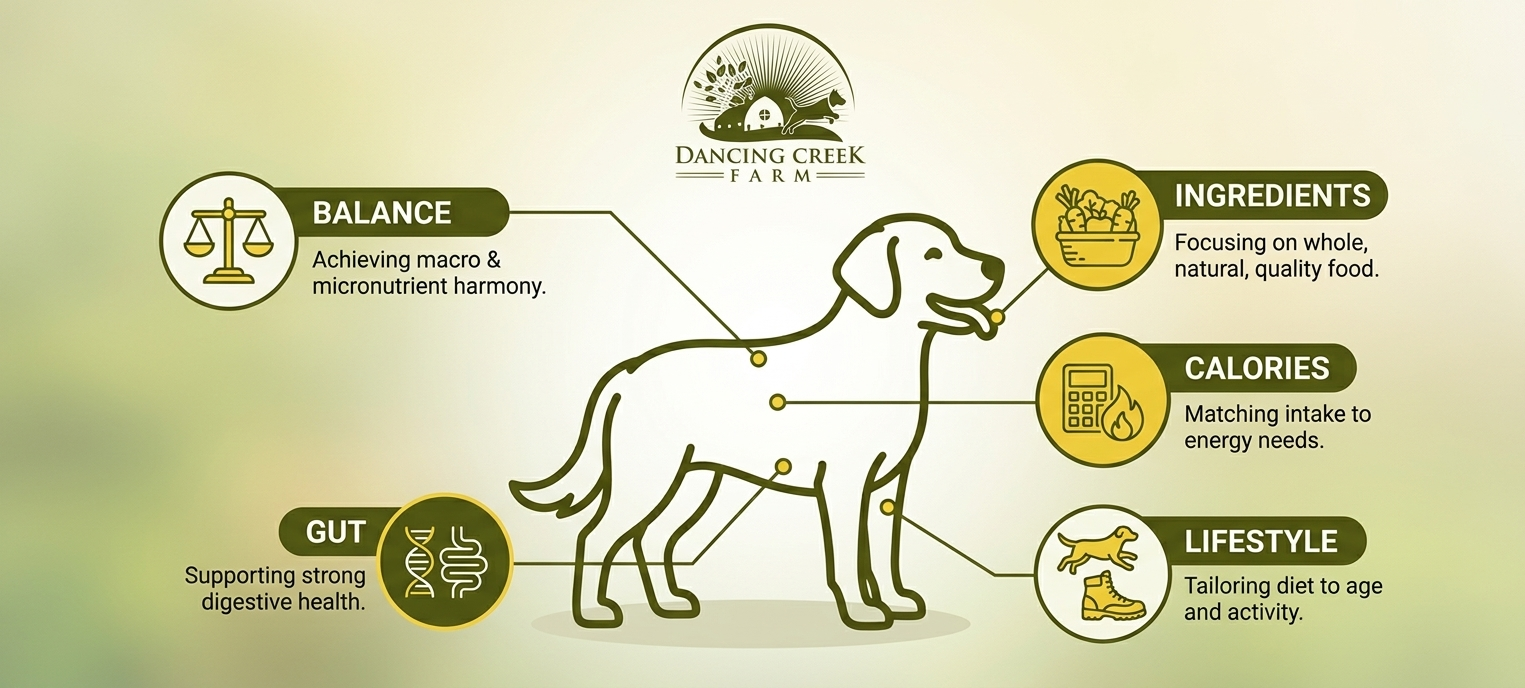
A holistic dog diet rests on a few principles you can actually see in your dog’s body:
- Complete and balanced first: all essential nutrients in the right ratios. A balanced dog diet beats a pretty ingredient list.
- Whole food ingredients: recognizable meats, organs, vegetables, and grains, with fewer fillers.
- Right calories: life stage, size, and activity change needs a lot.
- Gut health: fiber and steady routines support digestion and firm stools.
- The whole dog: exercise, sleep, and low stress shape how a dog uses its food.
Weight deserves special attention. The Association for Pet Obesity Prevention’s 2022 survey found 59% of US dogs were overweight or had obesity.
No ingredient list fixes overfeeding. Our older post on lean goat meat for dogs describes cutting portions for senior dogs that kept gaining.
What are the benefits of holistic dog food?
The benefits of holistic dog food depend on the specific food, because the label promises nothing. Dog Food Advisor’s nutritionist Laura Ward made this point in an August 2026 review: judge each food on its own merits.
When a well-formulated food follows holistic principles, owners often report steadier energy, firmer stools, a better coat, and fewer stomach upsets.
We’ll be straight with you: those are owner observations, not proven category benefits. Dogster’s veterinarian reviewer, in an article updated September 2026, notes no studies show holistic food beats other food.
Is a whole food dog diet better than kibble?
A whole food dog diet can be excellent, but only when it is balanced. Fresh dog food, cooked meals, quality kibble, and raw diets can all be complete and balanced, or not.
Homemade meals are where most owners slip.
A 2013 UC Davis study, reported by AAHA, analyzed 200 homemade dog food recipes.
The UC Davis team found very few met every essential nutrient need, even recipes published by veterinarians.
Picture building a house from memory without plans. It might stand, but you won’t know a beam is missing until something sags. An unformulated homemade recipe works the same way.
Our 2008 post on homemade meals for dogs shares recipes we used back then. Today we’d pair any recipe like that with a nutritionist’s review.
Do dogs on a holistic diet need supplements?
Most dogs eating a complete and balanced food don’t need extra dog supplements. Adding vitamins or minerals to a balanced diet can push some nutrients too high.
Supplements make sense in specific cases, ideally with a vet’s guidance:
- Omega-3 fish oil: often used for skin, coat, and joints.
- Probiotics: sometimes used for dog gut health after antibiotics or diet changes.
- Vitamin and mineral blends: needed when balancing a homemade diet.
Ask your veterinarian before starting any supplement, especially for a dog on medication.
How do you choose a holistic dog food?
Choose a holistic dog food the way vets choose any food: check the nutrition, then the company. These steps draw on WSAVA guidance:
- Find the AAFCO statement. Look for “complete and balanced” for your dog’s life stage.
- Read the ingredients. Named proteins near the top, few artificial additives.
- Check the calories. US labels list them, which makes portioning easier.
- Ask who formulates it. Strong brands employ a qualified animal nutritionist.
- Look up recalls. Search the brand name plus “recall.”
- Watch your dog for 6 to 8 weeks. Coat, stool, energy, and weight are your report card.
Switch foods gradually over about a week. Our guide on what to do when a dog is constipated covers what to watch for after a diet change.
When should you see a dog nutritionist?
See a dog nutritionist when you want to feed homemade meals, your dog has a health condition, or weight won’t budge. The gold standard is a Board Certified Veterinary Nutritionist: a veterinarian with residency training in canine nutrition.
The American College of Veterinary Internal Medicine certifies these specialists. You can search for a Board Certified Veterinary Nutritionist at VetSpecialists.com.
Be careful with titles. Anyone can call themselves a “pet nutritionist,” so ask about board certification or a PhD in animal nutrition.
How do we approach nutrition at Dancing Creek Farm?
Nutrition is part of the holistic dog health program at Dancing Creek Farm. Dogs on long-term dog boarding stay with us for months, so we see how food, exercise, and routine work together.
At Dancing Creek Farm, every animal receives quality feed, fresh water, and personalized nutrition. Special diets and owner-provided food are accommodated according to individual needs. We monitor weight and overall health regularly, while our dedicated farm team oversees feeding schedules and dietary care. Our goal is simple: healthy, happy animals and peace of mind for every owner.
Our checklist on what to look for in long-term dog boarding covers the feeding questions worth asking any facility.
Frequently asked questions
Is holistic dog food good for dogs?
Holistic dog food can be good for dogs, but the word itself guarantees nothing. Since no agency defines “holistic,” quality varies widely between brands. Judge each food by its AAFCO complete and balanced statement, its ingredient list, and how your dog’s weight, coat, and digestion respond over several weeks.
What is the difference between holistic and natural dog food?
Natural dog food has a legal definition from AAFCO: ingredients from plant, animal, or mined sources, with no chemically synthetic additives apart from added vitamins and minerals. Holistic dog food has no definition at all. A “holistic” food may not even meet the natural standard.
Is grain-free dog food more holistic?
Not necessarily. Grain-free is a formulation choice, not a sign of better nutrition. The FDA has investigated reports of a heart disease called dilated cardiomyopathy in dogs on certain diets.
Many of those diets were grain-free and high in peas or lentils, though no cause has been confirmed. Ask your vet before choosing grain-free.
How do you start feeding a dog holistically?
Start with your dog’s body, not a new bag. Ask your vet to score your dog’s body condition, then pick a complete and balanced food for their life stage. Measure portions, add daily exercise, and change foods slowly over about a week. Track weight, stool, and energy for two months.
The bottom line
Holistic dog nutrition is worth doing, and the label is worth ignoring. Focus on complete and balanced canine nutrition, whole food ingredients, a lean body, and a healthy gut, then let your dog’s results guide you.
When in doubt, bring in your vet or a board-certified dog nutritionist. And if you need a place that takes your dog’s routine seriously while you’re away, you can check availability at Dancing Creek Farm.
This article is general information, not veterinary advice. Talk to your veterinarian before changing your dog’s diet, especially if your dog has a health condition.

