What You Need To Know
- Raw vs kibble is a tradeoff, not a clear winner. Raw is less processed and very digestible. Kibble is safer to handle, cheaper, and easier to keep balanced.
- The research on raw benefits is mostly observational. Studies show links, not proof.
- The risks of raw are well documented. FDA testing found Salmonella and Listeria far more often in raw pet food than in dry food.
- For most families, a complete and balanced kibble with lightly cooked fresh toppers is the practical sweet spot.
The raw vs kibble debate gets heated fast, and both camps have a point. A raw dog food diet keeps ingredients close to their natural state. Kibble trades some of that for safety, consistency, and price.
Short answer: Neither raw nor kibble is better for every dog. Raw food can improve stool quality and appetite, but it carries real bacterial and nutritional risks. A complete and balanced kibble is safer and easier. For most homes, quality kibble plus some cooked fresh food is the best of both.
We’ve cared for dogs at Dancing Creek Farm in Cascade, Virginia since 2005, many of them for months at a time. We’ve fed raw, cooked, and dry. Here’s what we’ve learned, and what the science actually says.
What is the difference between raw dog food vs kibble?
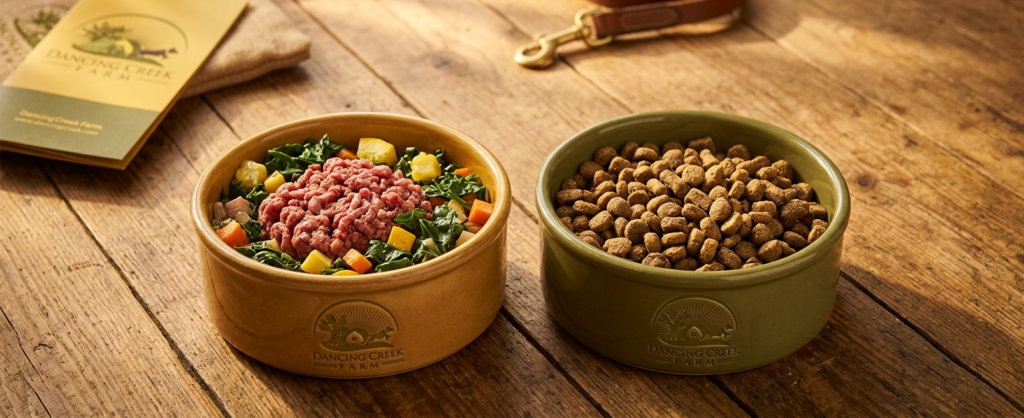
The difference between raw dog food vs kibble comes down to heat. Raw food is never cooked. Kibble is cooked at high heat and pressure, then dried into shelf-stable pellets.
Think of it like a garden tomato versus tomato sauce from a jar. The fresh one keeps more of its original structure. The jar keeps for a year and tastes the same every time.
- Raw dog food: uncooked muscle meat, organs, and bone, often with vegetables. It’s sold frozen, freeze-dried, or made at home.
- Kibble: ground ingredients mixed into a dough, extruded (pushed through a shaped die under heat), dried, then sprayed with fats and vitamins.
The BARF diet is the best-known raw style. BARF stands for “biologically appropriate raw food” or “bones and raw food,” and it took off in 1993, per Rover’s guide, when an Australian veterinarian promoted it in a book.
Is raw food good for dogs? What does the research show?
Raw food can be good for some dogs, but the strongest evidence is still observational. That means researchers saw patterns in surveys, not proof that raw food caused them.
The most cited work comes from the University of Helsinki’s DogRisk group. In a 2023 study in Scientific Reports, researchers looked at owner-reported diets for thousands of puppies.
They found that puppies fed mostly highly processed kibble had about a 29% higher risk of chronic gut problems later in life. Puppies fed non-processed, meat-based diets had roughly a 22% lower risk, per Smithsonian’s summary.
Here’s the catch. The researchers themselves said this shows an association only. Their lead researcher actually suggested a mix of about 20% raw and 80% dry food, not an all-raw diet.
Dog digestion is the other strong point for raw. The University of Illinois found that frozen raw, freeze-dried raw, and fresh foods had higher amino acid digestibility than extruded kibble.
Higher digestibility is why raw-fed dogs often produce smaller, firmer stools. Less of the food passes through unused.
But an earlier Illinois study, funded by Freshpet, found that all the diets tested, kibble included, were healthy choices for the dogs in the trial. Different isn’t the same as better.
What are the real risks of a raw dog food diet?
The biggest risk of a raw dog food diet is bacteria. The second is nutritional imbalance. Both are well documented.
The FDA’s Center for Veterinary Medicine tested over 1,000 pet food samples between 2010 and 2012.
Of 196 raw samples, 15 carried Salmonella and 32 carried Listeria. Of the 120 dry dog food samples, none tested positive.
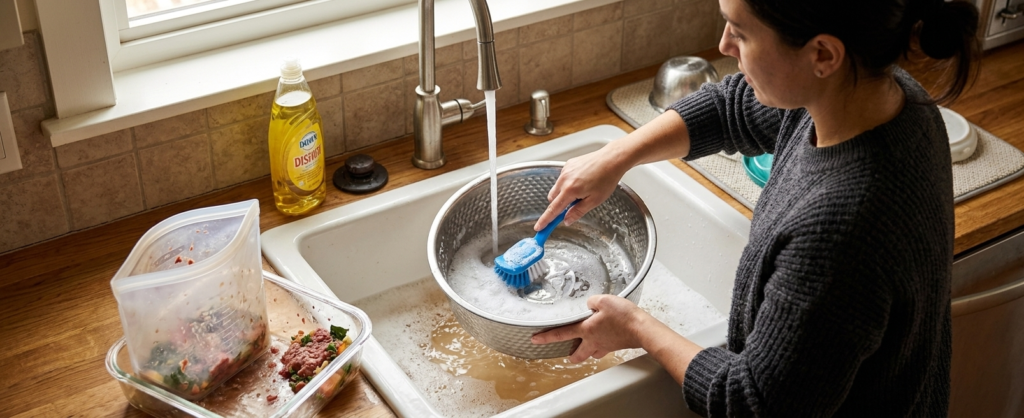
That risk doesn’t stay in the bowl. It spreads to counters, hands, and the dog’s mouth and stool. Picture a raw chicken breast that never leaves your kitchen floor: that’s the hygiene job raw feeding signs you up for.
The American Veterinary Medical Association discourages feeding raw or undercooked animal protein to dogs and cats.
Its list of concerns includes Salmonella, Listeria, E. coli bacteria, and highly pathogenic avian influenza (bird flu).
Bird flu is the newer worry.
In September 2025, the FDA linked H5N1 in a raw poultry cat food to a cat that had to be euthanized.
US cases so far have been in cats, but raw poultry products are the common thread.
Balance is the quieter problem.
Chewy’s veterinarian Jennifer Coates notes that research found every commercial raw diet studied had at least one nutritional imbalance. Homemade raw recipes tend to do even worse.
Who should skip raw entirely:
- Puppies: their immune systems are still developing.
- Senior dogs: they fight off infection less well.
- Immunocompromised dogs: including dogs on steroids or chemotherapy.
- Homes with babies, older adults, or anyone with a weak immune system.
- Therapy dogs: groups such as Pet Partners bar raw-fed dogs, per Purina.
Is kibble bad for dogs?
No. A complete and balanced kibble is a safe, proven way to feed most dogs. Commercial dog food has fed millions of dogs through long, healthy lives.
Kibble’s strengths are boring but important:
- Consistency: every scoop has the same nutrient ratios.
- Safety: high-heat cooking acts as a kill step for most bacteria.
- Cost and storage: it sits in a pantry for months.
Its weak spots are real too. High heat can lower the availability of some nutrients, and cheaper brands lean on fillers. That’s why reading dog food ingredients matters more than the format.
Look for an AAFCO “complete and balanced” statement for your dog’s life stage. Then check that a named protein, like chicken or lamb, leads the ingredient list. Our guide to holistic dog nutrition walks through how to read a label.
Raw dog food vs kibble: how do they compare side by side?
Raw dog food vs kibble differs most on safety, cost, and effort. Nutrition can be excellent in either one when the food is properly formulated.
| Factor | Raw dog food | Kibble |
|---|---|---|
| Processing | Minimal, uncooked | High heat and pressure |
| Digestibility | High | Moderate to high |
| Bacterial risk | Higher (Salmonella, Listeria) | Low |
| Nutritional balance | Varies; easy to get wrong | Consistent when AAFCO complete |
| Cost per day (medium dog) | About $5 to $15 | About $0.50 to $4 |
| Prep and storage | Freezer, thawing, strict cleaning | Scoop and serve |
| Stool | Smaller, firmer | Larger |
| Taste appeal | Very high | Moderate |
Cost ranges come from Freshpet’s veterinarian-written comparison, checked in November 2026. Treat them as rough guides, since prices swing by brand and region.
What about fresh vs dry dog food?
Fresh vs dry dog food is the middle path many vets now point to. Fresh food is gently cooked, so it keeps more of the whole-food appeal of raw while killing the bacteria.
PetMD notes that veterinarians typically prefer fresh dog food over raw. It’s a lot like the difference between sushi and a lightly seared tuna steak: similar ingredients, far less risk.
You don’t have to choose one bowl, either. Mixing is common:
- Cooked toppers on kibble: a spoonful of lean cooked meat, egg, or vegetables.
- Rotation: kibble most days, fresh meals a few times a week.
- Homemade dog food: possible, but only with a recipe balanced by a veterinary nutritionist.
Homemade is where good intentions slip. We covered why in our holistic nutrition guide: most homemade recipes studied miss at least one essential nutrient.
Can a raw diet help with dog food allergies?
Sometimes, but not because it’s raw. Dog food allergies are usually a reaction to a specific protein, not to cooking. A raw diet helps only if it removes the ingredient your dog reacts to.
Picture swapping restaurants to avoid peanuts. It works only if the new place doesn’t cook with peanuts too.
The reliable way to find a food allergy is an elimination diet with your vet: one new protein for 8 to 12 weeks, nothing else. A cooked novel-protein or prescription food does that job without the raw risks.
How do you choose the best food for dogs?
The best food for dogs is the one your dog thrives on that you can feed safely and consistently. Use these steps to decide:
- Check the label: AAFCO complete and balanced for your dog’s life stage.
- Look at your household: anyone very young, old, or immunocompromised rules out raw.
- Be honest about time: raw needs freezer space, thawing, and strict cleanup daily.
- Set a budget: raw can cost several times more than premium kibble.
- Talk to your vet: especially for puppies, seniors, or dogs with health problems.
- Watch your dog for 6 to 8 weeks: coat, stool, energy, and weight are the real report card.
| Choose this | If this sounds like you |
|---|---|
| Quality kibble | You want safe, simple, affordable, and balanced |
| Kibble plus cooked toppers | You want whole-food variety without raw risk |
| Fresh cooked food | Budget allows and you want minimal processing |
| Commercial raw | Healthy adult dog, no vulnerable people at home, strict hygiene habits |
How do you switch from kibble to raw safely?
If you decide on raw, switch slowly and treat the food like raw meat for people. These steps follow FDA safe handling guidance:
- Pick a commercial raw food labeled complete and balanced, preferably one treated with high pressure processing (HPP), which reduces bacteria without heat.
- Transition over 7 to 10 days, replacing about a quarter of the old food at a time.
- Thaw in the fridge, never on the counter or in the sink.
- Wash hands, bowls, and surfaces with hot soapy water, then disinfect.
- Pick up leftovers within 20 to 30 minutes and refrigerate or discard them.
- Skip face licks right after meals.
Watch stools closely during any diet change. Our guide on what to do when a dog is constipated covers the signs that mean a call to the vet.
How do we feed dogs at Dancing Creek Farm?
We lean toward real food, but we cook most of it. That’s our honest stance after years of feeding our own dogs and guests.
Back in 2008 we wrote about feeding our dogs lightly cooked goat meat. We cooked it just enough to help kill bacteria, then added rice, vegetables, and yogurt.
In another post on homemade meals for dogs, we explained why we bake chicken instead of feeding it raw on the bone. We also kept a quality dry food in the rotation.
We’d make the same call today: complete and balanced food as the base, with cooked whole foods on top. Raw can work for a healthy adult dog in a careful home, but we wouldn’t make it the default.
At Dancing Creek Farm, we understand that some dogs are accustomed to eating raw food as part of their daily routine. When owners request to continue a raw diet during boarding, we discuss the feeding requirements with them in advance, including portion sizes, meal schedules, and any special instructions. We ask owners to provide clearly labeled, properly portioned meals so feeding remains consistent throughout the stay. Our team follows the owner’s instructions carefully, keeps track of feeding routines, and monitors how each dog responds to their meals. We believe maintaining familiar eating habits can help dogs feel more comfortable and settled while staying away from home.
When your dog stays with us for long-term dog boarding, we keep their usual diet unless you tell us otherwise.
Our checklist on what to look for in long-term dog boarding lists the feeding questions to ask any facility.
Frequently asked questions
Do vets recommend raw food for dogs?
Most veterinarians do not recommend raw food for dogs. The AVMA, the FDA, and the CDC all warn about bacteria in raw pet food and about nutritional imbalances. Some holistic vets support raw feeding for healthy adult dogs. If you’re curious, ask your vet to help pick a balanced product and a safe routine.
Is a raw diet better than kibble for dog digestion?
Raw food is often more digestible than kibble, which is why raw-fed dogs usually have smaller, firmer stools. University of Illinois research found higher amino acid digestibility in raw and fresh foods than in extruded kibble. Gently cooked fresh food gets similar digestion benefits without the bacterial risk. More digestible doesn’t automatically mean healthier for every dog.
What is the BARF diet for dogs?
The BARF diet is a raw feeding style built on raw muscle meat, organs, and raw bones, plus some vegetables and fruit. BARF stands for “biologically appropriate raw food” or “bones and raw food.” It became popular in the 1990s. The idea is to mimic what wild canines eat, but home BARF recipes often end up short on key nutrients.
Can you mix raw food and kibble?
You can, and some researchers suggest a small raw share alongside dry food. The University of Helsinki’s lead researcher has suggested about 20% raw and 80% dry. The concern is safety rather than digestion, since raw handling risks still apply. A lower-risk way to mix is adding lightly cooked fresh food to kibble instead of raw meat.
Is raw dog food more expensive than kibble?
Yes, in most cases. Commercial raw food often costs around $5 to $15 a day for a medium dog, while premium kibble runs about $2 to $4. Homemade raw can cost less per pound but adds time, freezer space, and the expense of a nutritionist to balance recipes. Prices vary widely by brand, protein, and region.
Is raw food safe for puppies?
Raw food is generally not recommended for puppies. Their immune systems are still developing, and their growth needs precise calcium and phosphorus levels that homemade or poorly formulated raw diets often miss. If you want whole food for a puppy, choose a fresh or cooked food labeled complete and balanced for growth, and check with your veterinarian first.
The bottom line
Raw vs kibble isn’t a battle of good food against bad food. Raw offers digestibility and appeal with real safety and balance risks. Kibble offers safety, consistency, and value with more processing.
For most dogs and most homes, we’d choose a complete and balanced kibble with lightly cooked fresh toppers. Bring in your vet before going fully raw.
Planning a trip and want your dog’s routine kept steady while you’re away? You can check availability at Dancing Creek Farm.
This article is general information, not veterinary advice. Talk to your veterinarian before changing your dog’s diet, especially for puppies, seniors, or dogs with health conditions.
Last updated: November 2026

