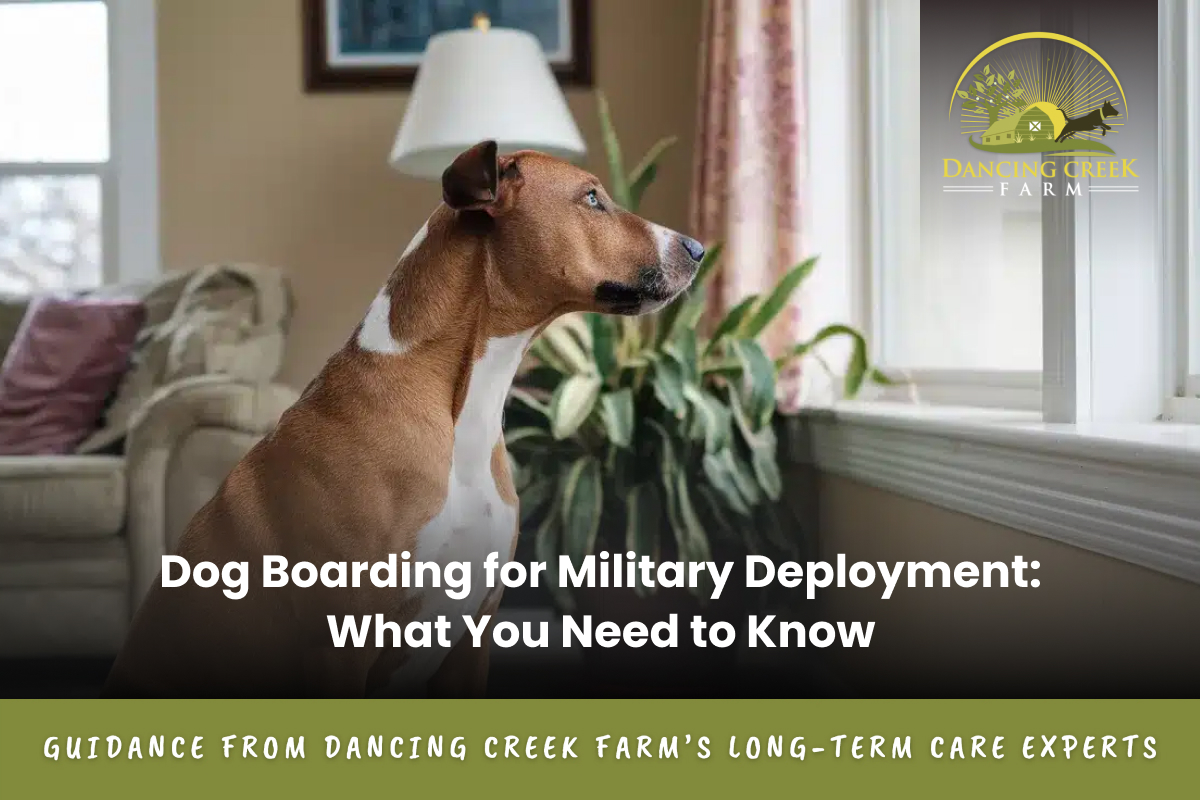
Military service often requires sacrifice, not only from service members but also from their families, including their beloved pets. Whether you’re facing a short assignment, overseas deployment, training exercise, or permanent change of station (PCS), one important concern remains: Who will care for your dog while you’re away?
For many military families, finding safe, reliable, and compassionate care can be challenging. Fortunately, options such as military dog boarding, military dog fostering, and long-term kennel programs help ensure dogs remain safe, healthy, and happy throughout a deployment period.
At Dancing Creek Farm, we understand the unique challenges military families face. Dogs thrive on routine, stability, and companionship, and extended separations can be stressful for both pets and owners. That’s why planning ahead is essential.
In this guide, we’ll cover everything military pet owners need to know about dog boarding during deployment, how military dog fostering works, what to look for in a long-term boarding facility, and how to create the best care plan for your dog’s future.
Why Military Families Need Specialized Dog Care Solutions
Military deployments often involve circumstances that traditional pet care services cannot accommodate.
Unlike a weekend trip or short vacation, deployments can last:
- Several months
- A year or longer
- Multiple deployments over time
- Unexpected extensions
These situations require more than occasional pet sitting.
Dogs need:
- Daily exercise
- Proper nutrition
- Veterinary care
- Social interaction
- Mental stimulation
- Consistent routines
- Emotional support
Military families often seek specialized care programs because they provide stability during uncertain times.
What Is Military Dog Boarding?
Military dog boarding refers to long-term pet care services designed to accommodate military personnel during deployments, training assignments, relocations, and other service-related obligations.
Unlike standard boarding programs, military-focused boarding solutions typically emphasize:
- Extended stays
- Structured routines
- Consistent caregivers
- Flexible arrangements
- Long-term health monitoring
- Ongoing communication with owners
The goal is to ensure dogs receive continuous, high-quality care throughout the owner’s absence.
Common Situations That Require Dog Boarding During Deployment
Military pet owners may require long-term care in several situations.
Overseas Deployment
Many overseas assignments do not allow pets to accompany service members.
Long-term boarding provides a secure solution until deployment ends.
Training Programs
Extended military schools and training exercises can make pet ownership temporarily difficult.
A boarding facility can maintain a dog’s routine while the owner completes training.
PCS Relocations
Permanent change of station moves often involve housing delays, travel restrictions, or temporary accommodations that are not pet-friendly.
Long-term care can bridge the gap during transitions.
Emergency Activation
Reserve and National Guard members may receive sudden activation orders.
Having an established boarding plan ensures pets receive immediate care when unexpected deployments occur.
Understanding Military Dog Fostering
Military dog fostering is another option frequently used by service members.
In a fostering arrangement, a volunteer family or approved caregiver temporarily houses and cares for the dog until the owner returns.
Benefits may include:
- Home-based environment
- Individual attention
- Family interaction
- Social experiences
However, fostering arrangements vary widely depending on the caregiver’s experience and resources.
Before selecting military dog fostering, owners should evaluate:
- Caregiver experience with dogs
- Veterinary care access
- Ability to manage emergencies
- Commitment level
- Living environment
- Long-term availability
A structured boarding facility often provides more consistency and professional oversight, especially for extended deployments.
Military Dog Boarding vs. Military Dog Fostering
Many service members wonder which option is best.
Military Dog Boarding
Advantages include:
- Professional supervision
- Secure facilities
- Consistent routines
- Trained staff
- Scheduled exercise
- Health monitoring
- Emergency protocols
Potential considerations:
- Dogs live in a managed environment rather than a family home.
Military Dog Fostering
Advantages include:
- Home environment
- Family interaction
- Potentially lower cost
Potential considerations:
- Variable experience levels
- Less structured oversight
- Changes in caregiver availability
The ideal solution depends on the dog’s personality, health needs, and deployment length.
What to Look for in a Long-Term Kennel Program
Not all boarding facilities are equipped for extended stays.
When evaluating a long-term kennel, consider the following factors.
Experienced Staff
Dogs staying for months require knowledgeable caregivers who understand canine behavior, health monitoring, and stress management.
Ask about:
- Staff experience
- Training qualifications
- Emergency response procedures
Daily Exercise Programs
Regular activity helps maintain:
- Physical fitness
- Emotional well-being
- Healthy weight
- Mental stimulation
Look for facilities that provide structured exercise opportunities every day.
Veterinary Relationships
A quality boarding facility should have access to veterinary support for:
- Routine care
- Emergencies
- Medication management
- Senior dog monitoring
Clean and Secure Environment
Safety should always be a priority.
Evaluate:
- Fencing systems
- Kennel cleanliness
- Sanitation practices
- Security measures
Communication and Updates
Military families appreciate regular updates during deployment.
Many facilities offer:
- Photos
- Progress reports
- Health updates
- Communication with family members
Preparing Your Dog for Long-Term Boarding
Proper preparation can make the transition much easier.
Schedule a Trial Stay
Short boarding visits help dogs become familiar with:
- Staff
- Routines
- Environment
- Other dogs
This reduces anxiety during a longer stay.
Update Veterinary Records
Ensure all records are current, including:
- Vaccinations
- Medications
- Microchip information
- Emergency contacts
Provide Detailed Instructions
Share information regarding:
- Feeding schedules
- Behavioral habits
- Medical conditions
- Favorite activities
- Comfort items
The more information caregivers have, the smoother the transition.
Pack Familiar Belongings
Items such as blankets or toys may help dogs feel more comfortable in a new environment.
Practical Experience from Dancing Creek Farm
At Dancing Creek Farm, we’ve had the privilege of supporting military families who needed dependable long-term care for their dogs during deployments, training assignments, and extended relocations. Through these experiences, we’ve learned that consistency is one of the most important factors in a dog’s well-being. Dogs adjust best when they receive structured daily routines, regular exercise, social interaction, and attentive care from familiar caregivers. Many military clients tell us that receiving updates about their dogs provides tremendous reassurance while they focus on their duties. We’ve seen firsthand how proper long-term boarding can help dogs remain happy, healthy, and emotionally secure until their owners return home.
Supporting Senior Dogs During Deployment
Senior dogs often require additional attention during extended separations.
Important considerations include:
Medication Management
Older dogs may need:
- Daily medications
- Specialized supplements
- Scheduled treatments
Mobility Support
Facilities should accommodate:
- Arthritis
- Joint issues
- Mobility limitations
Frequent Health Monitoring
Regular observation helps identify changes before they become serious health concerns.
Choosing an experienced long-term care provider becomes especially important for senior pets.
How Long-Term Boarding Benefits Military Families
Military life can be unpredictable.
A trusted boarding solution provides several advantages.
Peace of Mind
Knowing your dog is receiving professional care allows you to focus on your mission.
Consistent Care
Dogs thrive when routines remain stable.
Emergency Preparedness
Professional facilities typically have plans in place for medical emergencies and unexpected situations.
Reduced Family Stress
Family members already managing deployment-related challenges often appreciate having a dependable pet care solution.
Creating a Long-Term Care Plan Before Deployment
The best time to plan is before deployment orders arrive.
Consider developing a comprehensive strategy that includes:
Primary Care Option
Select your preferred boarding or fostering provider.
Emergency Backup Plan
Identify alternate caregivers if circumstances change.
Financial Preparation
Budget for:
- Boarding fees
- Veterinary expenses
- Emergency care
- Transportation
Legal Documentation
Include pet care instructions in estate and emergency planning documents whenever possible.
This approach provides additional protection for your dog’s future.
Questions to Ask a Military Dog Boarding Provider
Before committing to a facility, ask:
- How much experience do you have with long-term stays?
- How often are dogs exercised?
- How are medical emergencies handled?
- Can medications be administered?
- How frequently are owners updated?
- What security measures are in place?
- Are there staff members available after hours?
- What happens if deployment dates change?
The answers can help determine whether a facility is prepared for military-related boarding needs.
Why Planning Early Matters
Waiting until deployment orders arrive can limit your options.
Early planning allows you to:
- Visit facilities
- Meet caregivers
- Schedule trial stays
- Complete paperwork
- Prepare your dog gradually
This preparation often results in a smoother experience for both pets and owners.
Final Thoughts
Military service requires dedication, flexibility, and resilience. While deployments and assignments can create challenges for pet ownership, proper planning ensures your dog continues receiving exceptional care throughout your absence.
Whether you choose military dog boarding, military dog fostering, or a specialized long-term dog kennel, the key is selecting a trusted solution that prioritizes your dog’s safety, health, and happiness.
By planning ahead and partnering with experienced caregivers, you can serve with confidence knowing your loyal companion is receiving the attention and care they deserve until you’re reunited once again.
Frequently Asked Questions
What is military dog boarding?
Military dog boarding is a long-term pet care service designed to support military personnel who need dependable care for their dogs during deployments, training assignments, or relocations.
How long can a dog stay in long-term boarding?
Many facilities accommodate stays ranging from several weeks to many months, depending on the owner’s needs and the facility’s capabilities.
Is a military dog better than boarding?
Both options have benefits. Fostering provides a home environment, while boarding facilities offer professional supervision, structured routines, and health monitoring.
How can I prepare my dog for deployment boarding?
Schedule trial visits, update veterinary records, provide detailed care instructions, and ensure your dog becomes familiar with the boarding environment before an extended stay.
Are senior dogs suitable for long-term boarding?
Yes. Many experienced facilities provide medication management, mobility support, and health monitoring specifically for senior dogs.
When should military families start planning pet care?
Ideally, planning should begin as early as possible to allow time for researching providers, arranging visits, and preparing the dog for a successful transition.