Healing Through the Bond With Your Dog

For many people, life feels overwhelming right now.

The news, financial stress, health concerns, family obligations, work pressures, and the constant noise of social media can leave us carrying more anxiety than ever before. What many dog owners don’t realize is that our dogs often feel the weight of that stress too.

Dogs are masters at reading us.

They notice our tension, our frustration, our sadness, and our uncertainty. They may not understand why we’re anxious, but they absolutely recognize that something is different. Over time, that emotional energy can create confusion and instability for them.

Then a cycle begins.

The dog becomes more reactive, anxious, demanding, destructive, or difficult to manage. The owner becomes frustrated and overwhelmed. Guilt sets in. The bond weakens. Both dog and human begin feeding off each other’s stress.

I see it every day.

Many good dogs end up on behavior medications, not because they’re bad dogs, but because they’re living in an environment filled with uncertainty, inconsistency, or emotional chaos. Likewise, many owners are struggling emotionally themselves and don’t realize how much their dogs are mirroring what they’re feeling.
The good news is that healing can happen for both of you.

One of the greatest gifts you can give your dog is leadership.

Leadership is not dominance. It’s not intimidation. It’s not forcing your dog into submission.

Leadership is creating structure, consistency, and trust.

Dogs thrive when they understand their role in the family. They find comfort when someone calmly guides them through life. Boundaries don’t create stress for dogs—they often reduce it.

When you begin teaching your dog simple skills, following through with expectations, and spending quality time together, something amazing happens.

Your dog starts looking to you for direction instead of making every decision on their own.

You begin paying attention to your dog’s body language, emotions, and needs.

Communication improves.

Trust deepens.

The relationship becomes less about managing problems and more about enjoying each other.

Many people tell me that training changed far more than their dog’s behavior. It changed them.

  • It gave them confidence.
  • It got them outside walking.
  • It created routine.
  • It gave them a reason to focus on something positive.
  • It strengthened a bond they didn’t realize had become disconnected.
  • The truth is that dogs don’t need perfect owners.
  • They need present owners.

Simple Steps to Strengthen the Bond

  1. Spend 15 minutes each day doing something together without distractions.
  2. Take structured walks where your dog learns to follow your lead instead of pulling you through the neighborhood.
  3. Practice simple obedience commands and celebrate small successes.
  4. Put the phone away and truly observe your dog.
  5. Create daily routines for meals, exercise, rest, and enrichment.
  6. Learn to remain calm and consistent instead of reacting emotionally.
  7. Reward good choices more often than you correct mistakes.
  8. Make time for fun. Play, explore, and simply enjoy each other’s company.

Most importantly, remember that your dog is not judging you.

Your dog doesn’t care about your bank account, your job title, your mistakes, or what happened yesterday.

They simply want to feel safe, connected, and included in your life.

Sometimes the healing we’re searching for isn’t found in another self-help book or another hour scrolling social media.

Sometimes it’s waiting at our feet, wagging its tail, hoping we’ll slow down long enough to connect.

The bond between a dog and their person can be one of the most powerful relationships we’ll ever experience.

When we learn to lead with calmness, consistency, and love, both ends of the leash begin to heal.

If you’re struggling, know that you’re not alone.

Sometimes both dogs and people need a reset.

That’s one of the reasons we created our 4-Week Board & Train program at Dancing Creek Farm. It gives everyone a chance to step away from the daily frustrations and lay a solid foundation. We teach communication, structure, boundaries, and leadership in a way that makes sense for both ends of the leash.

The four weeks away often becomes a reset for the entire family. Dogs return home with a clearer understanding of expectations, and owners return to a relationship built on trust, communication, and consistency.

When your dog comes home, the training doesn’t stop. We teach you how to maintain what your dog has learned and how to continue building that relationship long after the program is over.

And if you’re still struggling afterward, we’re here.

Not just for your dog, but for you too.

Through our WhatsApp group you’ll have direct access to our team. If you need encouragement, guidance, or simply someone who understands what you’re going through, you can message me directly.

At Dancing Creek Farm, we believe dog training is about far more than obedience.

It’s about creating balance, confidence, trust, and connection.

Because when the relationship heals, everything else gets easier.

Tamara Belotti

www.dancingcreekfarm.com


Related Posts

For most dog owners, caring for their dog is simply part of everyday life.

You know when your dog eats, where they sleep, which treats they like, what makes them nervous, and who they trust. You may never imagine a situation where you suddenly cannot be there.

But life does not always give us advance notice.

An unexpected hospitalization, family emergency, work assignment, military deployment, relocation, mobility issue, or other major life change can temporarily,or permanently, affect your ability to care for your dog.

That is why every dog owner should have a backup care plan for dogs.

A backup plan does not mean you expect something bad to happen. It means your dog will not have to face uncertainty if something unexpected happens to you.

What Is a Backup Care Plan for a Dog?

A backup care plan is a written and practical plan explaining who will care for your dog if you temporarily or permanently cannot.

It can be as simple as arranging a trusted friend to care for your dog during a short emergency. For more complicated situations, it may involve long term dog boarding, a designated caregiver, transportation arrangements, veterinary information, financial instructions, or a formal Pet Trust.

The important thing is that the plan should be specific.

Instead of simply telling someone, “My sister can take my dog,” consider documenting:

  • Your dog’s daily routine
  • Feeding schedule and dietary requirements
  • Medications
  • Veterinarian information
  • Behavioral considerations
  • Exercise needs
  • Emergency contacts
  • Preferred caregiver
  • Backup caregiver
  • Financial arrangements
  • Boarding or transportation preferences
  • Instructions for long-term care

The more clearly you document these details, the easier it becomes for someone else to step in.

1.Emergencies Can Happen Without Warning

One of the biggest reasons to create a backup care plan is that emergencies rarely happen at convenient times.

You could be away from home when a family emergency occurs. You could become temporarily unable to drive. You could be hospitalized unexpectedly.

Your dog still needs food, exercise, medication, supervision, and companionship.

Without a plan, family members may have to make decisions quickly while already dealing with a stressful situation.

A backup plan removes some of that uncertainty.

Your designated caregiver should know where your dog can go, who should be contacted, what your dog needs, and how to access those resources.

2.Your Dog May Need More Than Someone Who Can Feed Them

Choosing a backup caregiver is not simply about finding someone who likes dogs.

Think about what your dog actually needs.

Does your dog require medication? Are they nervous around unfamiliar people? Do they need private space? Are they comfortable around other dogs? Do they have mobility limitations? Do they need structured exercise?

These details matter.

For example, a dog that happily stays with a friend for a weekend may require a very different arrangement if the owner is going to be away for several months.

This is where long term dog care planning becomes important.

A suitable arrangement should consider your dog’s physical needs, emotional comfort, routine, environment, and duration of care—not simply whether someone has an empty room at home.

3.A Backup Plan Can Reduce Stress During Relocation

Moving is another situation that can disrupt a dog’s routine.

Sometimes the owner has a gap between leaving one home and moving into another. Construction delays, closing dates, international relocation, or travel arrangements can make the transition more complicated than expected.

Dancing Creek Farm has seen this type of situation firsthand.

One customer review on the farm’s website describes how the family relied on Dancing Creek Farm for their dog Kona during a difficult relocation. The family described the farm as providing a safe and loving home while they transitioned between homes, with regular pictures, videos, and messages keeping them informed.

That is a useful real-world reminder: temporary care can become essential when life circumstances change unexpectedly.

Having a plan before the moving truck arrives can make that situation considerably easier.

4.Military Families May Need a More Detailed Plan

Military families can face particularly challenging scheduling and relocation circumstances.

Deployment orders, training assignments, overseas moves, and changing timelines can make pet care difficult to arrange at the last minute.

A backup plan should identify where your dog will stay, who has authority to make decisions, how veterinary care will be handled, and how your dog will get to the caregiver.

Dancing Creek Farm specifically provides military dog fostering and long-term boarding options and recommends that owners document feeding schedules, dietary restrictions, exercise requirements, medical history, behavioral quirks, emergency contacts, and veterinary information before deployment.

The lesson applies beyond military families: the more information your caregiver has before an emergency, the fewer decisions they have to make under pressure.

5.Your Backup Plan Should Include Transportation

Transportation is an easy part of emergency planning to overlook.

Imagine that your designated caregiver lives several hours away. Who will transport your dog if you cannot drive?

Or what happens if your dog needs to move from temporary care into a longer-term arrangement?

Dancing Creek Farm offers professional dog transport for relocation, airport assistance, veterinary appointments, boarding and training hand-offs, and special-care situations. The service includes door-to-door and meet-up options depending on the family’s needs.

Including transportation instructions in your backup plan can prevent an already stressful situation from becoming more complicated.

6.Consider What Happens If You Cannot Care for Your Dog Long-Term

A short-term emergency plan is important, but some owners should think beyond the next few days or weeks.

What happens if you become unable to care for your dog for months?

What if you are recovering from a serious illness?

What if your dog is elderly and requires increasingly specialized care?

What happens if you are no longer able to care for your dog at all?

These are difficult questions, but avoiding them does not make them disappear.

This is where dog retirement care and a formal Pet Trust for dogs may become part of a responsible long-term plan.

Dancing Creek Farm’s Pet Trust & Forever Care program is designed for owners who want to establish arrangements for their dog’s future if they become incapacitated or pass away. The program addresses issues such as permanent placement, medical and dietary instructions, executor communication, and backup arrangements if an initial caregiver cannot continue.

7.Create a Simple Emergency Dog-Care Document

You do not need to make the process complicated.

Start with a document that contains the information someone would need if they suddenly became responsible for your dog.

Your emergency dog-care checklist

Basic information

  • Dog’s name, age, breed and identifying information
  • Microchip information
  • Current photographs

Health information

  • Veterinarian’s name and phone number
  • Medical conditions
  • Medications and dosage instructions
  • Allergies
  • Vaccination records

Daily routine

  • Feeding times
  • Food brand and quantity
  • Exercise routine
  • Sleeping preferences
  • Favorite activities

Behavior

  • Things that frighten your dog
  • Interactions with other dogs
  • Handling preferences
  • Important commands
  • Known behavioral concerns

Care arrangements

  • Primary caregiver
  • Backup caregiver
  • Boarding facility
  • Transportation provider
  • Emergency contact

Financial information

  • Who will pay for emergency care?
  • Where are funds available for your dog’s care?
  • Are there specific instructions in your estate plan or Pet Trust?

Keep a copy somewhere your trusted contacts can access it.

8.Review the Plan Every Year

A backup care plan is not something you create once and forget.

Your dog’s needs can change.

Your dog may develop a medical condition. Your veterinarian may change. Your preferred caregiver may move away. Your dog may become older and need different accommodations.

Your own circumstances can change too.

Review the plan at least once a year and whenever there is a major change in your dog’s health, your household, or your living situation.

A five-minute review today could prevent hours of uncertainty later.

Your Dog Deserves a Plan, Not a Panic Decision

Planning for your dog’s future is not pessimistic.

It is an extension of responsible dog ownership.

You already plan your dog’s meals, veterinary appointments, vaccinations, exercise, and daily routine. A backup care plan simply extends that same responsibility to situations you cannot predict.

At Dancing Creek Farm, the need for flexible care can range from short-term boarding to months of long term dog boarding, military deployment support, professional transportation, and retirement or forever care. The farm has provided dog boarding and training since 2005 and offers individualized care, climate-controlled cabins, fenced areas, experienced handlers, and regular communication with families.

The goal is not to assume that something will go wrong.

The goal is to make sure that if something does go wrong, your dog already has somewhere safe to go.

If you do not have a backup plan yet, start small: choose a trusted person, write down your dog’s essential information, identify an emergency care option, and talk with your family about what should happen.

Because when your dog depends on you for everything, planning for the unexpected is one of the most loving things you can do.

FAQs

1. What should I include in a backup care plan for my dog?

Include your dog’s feeding routine, medical records, medications, veterinarian information, behavioral needs, emergency contacts, preferred caregiver, backup caregiver, transportation arrangements, and instructions for temporary or long-term care.

2. What happens to my dog if I can no longer care for them?

Your dog should have a designated caregiver or care facility identified in advance. For longer-term situations, options can include long-term boarding, retirement care, or a formal Pet Trust that establishes future care arrangements.

3. Is long-term boarding a good backup option for dogs?

It can be an appropriate option when a dog needs care for an extended period because of relocation, deployment, major life changes, or other circumstances. The facility should be evaluated based on its ability to provide consistent care, supervision, exercise, appropriate housing, and communication with the owner or caregiver.

4. How do I plan for my dog’s care if I become seriously ill?

Start by naming a trusted caregiver and documenting your dog’s medical and daily-care information. You should also discuss veterinary authorization, finances, transportation, and longer-term care options. For permanent arrangements, consider discussing a Pet Trust with an appropriate legal professional.

5. How can I make sure my dog is cared for if I die?

Create a written estate and pet-care plan that identifies who will care for your dog, how expenses will be covered, and what should happen if the first caregiver cannot continue. A formal Pet Trust may provide additional structure for long-term or permanent care.

Leaving your dog for several weeks or months can bring up one of the most emotional questions an owner can ask: “Will my dog forget me?”

It is a completely understandable concern. Dogs are part of the family, and their daily lives are often built around familiar people, routines, smells, and places. When that routine changes because of travel, military deployment, relocation, work, or another extended commitment, owners may worry that a long absence could weaken the bond they have built with their dog.

The good news is that long term dog boarding does not mean your dog simply forgets you.

Dogs can form strong attachments to people, and changes in a dog’s routine can affect behavior and emotions. However, a temporary separation is very different from permanently losing a familiar person. Dogs can adapt to a new routine while still maintaining their relationship with their owners.

The key is making sure the boarding experience provides safety, consistency, appropriate care, and enough positive interaction for the dog to feel secure while away.

Do Dogs Remember Their Owners After Long-Term Boarding?

Yes, dogs can recognize and remember familiar people after periods of separation.

Your dog does not need to see you every day to maintain familiarity with you. Your scent, voice, appearance, and the experiences you have shared all contribute to your relationship.

During long term dog boarding, your dog may become comfortable with new caregivers and develop a temporary routine that does not include you. That does not mean your dog has replaced you or forgotten the relationship you share.

In fact, becoming comfortable with caregivers can be a positive sign.

A dog that learns to relax, eat, sleep, exercise, and interact appropriately while boarding is demonstrating an ability to adapt to a temporary change.
Why Your Dog May Seem Different When You Pick Them Up

One thing that can surprise owners is their dog’s behavior at reunion.

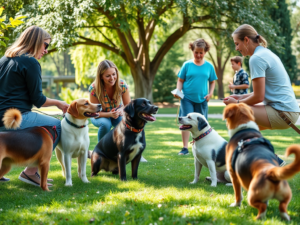
Some dogs become extremely excited. They may jump, wag their tails, vocalize, or stay very close to their owner.

Other dogs may appear surprisingly calm.

That does not automatically mean the dog is no longer attached to you.

Dogs respond to reunions differently. Your dog may also be tired after travel, processing the change in routine, or simply transitioning from one environment back into another.

The important thing is to look at the overall relationship rather than interpreting one moment at pickup.

A dog that comfortably interacted with caregivers during boarding has not necessarily become less bonded to its family. It may simply have learned that it can feel safe with more than one trusted person.

A Healthy Boarding Routine Can Help Dogs Adjust

One of the most important parts of successful dog boarding adjustment is predictability.

Imagine your dog’s normal day at home.

There may be a familiar time for breakfast, walks, play, naps, bedtime, and interaction with family. When a dog enters a boarding environment, those familiar patterns change.

A thoughtful boarding program replaces uncertainty with a new routine.

That might include:

  • Consistent feeding times
  • Regular exercise
  • Predictable rest periods
  • Familiar caregivers
  • Safe outdoor activity
  • Comfortable sleeping arrangements
  • Individual attention
  • Monitoring of appetite and behavior

At Dancing Creek Farm, dogs stay in climate-controlled cabins with their own fenced yards, while the facility also provides larger fenced areas for exercise and enrichment. The farm emphasizes individualized care rather than treating every dog exactly the same.

For a dog staying several weeks or months, this consistency can become an important source of security.

Your Dog Can Be Happy Without Forgetting You

This is perhaps the most important distinction for worried owners.

A dog being comfortable at boarding is not evidence that your dog doesn’t miss you.

It is actually something owners should want.

If your dog cannot relax, eat, sleep, exercise, or interact with caregivers unless you are present, an extended separation can be much harder.

A good boarding experience gives dogs an opportunity to learn:

“My family is away, but I am still safe.”

That is very different from:

“My family no longer matters.”

The ability to adapt does not erase attachment.
What About Dogs With Separation Difficulties?

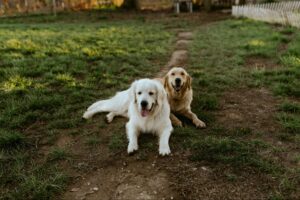
Some dogs have a particularly difficult time when separated from their owners. Others are naturally more independent.

This is one reason boarding facilities should evaluate dogs individually.

A dog’s age, temperament, previous experiences, social behavior, training, and familiarity with boarding can all influence how they respond to a new environment.

Owners should be honest during the intake process about behaviors such as:

  • Excessive distress when left alone
  • Destructive behavior
  • Persistent barking
  • Difficulty eating when separated
  • Previous negative boarding experiences
  • Fear of unfamiliar people
  • Reactivity toward dogs
  • Medical or behavioral concerns

At Dancing Creek Farm, owners are asked detailed questions about their dog’s temperament, interactions with other dogs, previous boarding or daycare experience, and why boarding is needed. This information helps the team understand the dog before the stay begins.

That individualized approach is particularly important for longer stays.

A Real Example From Dancing Creek Farm

One example that illustrates this well comes from a family whose dogs stayed at Dancing Creek Farm for five months.

According to the owner’s review, the dogs returned home healthy and happy after their extended stay. The family received regular pictures, allowing them to see how their dogs were doing throughout the boarding period.

What is particularly interesting is that the owner described the dogs as comfortable enough at the farm that they did not appear to be in a hurry to leave.

For an owner, that can initially sound almost contradictory:

“If my dog is happy there, does that mean they don’t need me anymore?”

No.

It means the dogs had successfully developed a sense of security in another environment.

The goal of quality long-term care is not to make dogs choose between their family and their caregivers. It is to help them feel safe while their family is temporarily away.

When the owners returned, the dogs could reconnect with their family while also having had a positive experience during the separation.

That is exactly the type of outcome owners should hope for.

How Owners Can Maintain the Bond During Boarding

You do not need to constantly communicate with your dog to preserve your relationship.

In fact, what matters most is the quality of the relationship you have built over time.

Before boarding, you can help by maintaining familiar habits and giving the boarding team accurate information about your dog’s routine.

You can also provide appropriate comfort items if the facility permits them.

At Dancing Creek Farm, communication is another important part of the experience. The farm says families can receive pictures and videos and can use communication options such as FaceTime or WhatsApp to stay connected.

These updates can be valuable for dog separation from the owner, particularly for the humans involved.

Sometimes the owner needs reassurance just as much as the dog needs care.
What Happens When Your Dog Comes Home?

The reunion is only one part of the transition.

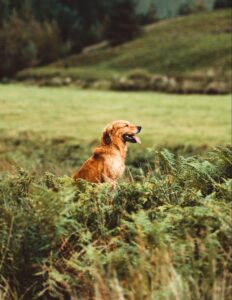
After a long stay, your dog may need some time to readjust to home life.

You may notice temporary changes such as:

  • Sleeping more than usual
  • Being unusually excited
  • Wanting extra attention
  • Being slightly unsettled by changes in routine
  • Needing time to settle back into normal household patterns

Try not to expect your dog to immediately behave exactly as they did before boarding.

Instead, return to familiar routines gradually.

Feed meals at normal times, provide appropriate exercise, allow plenty of rest, and give your dog time to reconnect with the household.

The same principle that helps during dog boarding adjustment, predictability, can also help when your dog returns home.

Choosing the Right Boarding Environment Matters

Not every boarding experience is the same.

If your dog will be away for an extended period, look beyond the question of whether a facility has availability.

Ask:

  • How are dogs introduced to the environment?
  • Are individual temperaments considered?
  • Where will my dog sleep?
  • How much outdoor time is available?
  • What happens if my dog is uncomfortable around other dogs?
  • How often will staff interact with my dog?
  • How will behavioral or health concerns be communicated?
  • Will I receive updates during the stay?

At Dancing Creek Farm, dogs can have private cabins and fenced yards, including accommodations for dogs that are not comfortable in group settings. The farm also emphasizes experienced handlers, outdoor areas, enrichment, and communication with families.

For long stays, these details can make a meaningful difference.

Final Thoughts: Your Dog Doesn’t Need to Choose

The fear that your dog will forget you during Long Term Dog Boarding usually comes from a place of love.

You may imagine your dog wondering where you went, becoming attached to someone else, and eventually returning home as a completely different dog.

But a healthier way to think about boarding is this:

Your dog can learn to be comfortable without you while still loving and remembering you.

A successful boarding experience should give your dog stability during your absence, not replace the bond you share.

The goal is for your dog to have a safe, structured, positive experience while you are away and then comfortably transition back into life with you when you return.

At Dancing Creek Farm, the focus is on creating an environment where dogs can feel secure, receive individualized attention, maintain predictable routines, and enjoy their time away from home. For owners considering dog boarding in Virginia for an extended stay, choosing a facility that understands both the dog’s needs and the owner’s concerns can make the entire experience easier.

Your dog doesn’t have to forget you to enjoy their stay.

And you don’t have to feel guilty for giving them the opportunity to feel safe, confident, and cared for while you’re away.

Frequently Asked Questions

1. Will my dog forget me after long term boarding?

No. Dogs can maintain familiarity with and attachment to their owners even when separated for an extended period. A dog becoming comfortable with caregivers does not mean the relationship with its owner has disappeared.

2. How long does it take a dog to adjust to long term boarding?

Every dog is different. Some settle quickly, while others need several days or longer. Age, temperament, previous boarding experiences, and the dog’s ability to adapt to new routines can all influence the adjustment period.

3. Will my dog be sad while I am away?

Some dogs may show temporary signs of stress or changes in behavior when their routine changes. A consistent dog boarding routine, attentive caregivers, appropriate exercise, and a suitable environment can help many dogs adjust.

4. Should I stay in contact with my dog during long term boarding?

Owner updates can provide reassurance and help families feel connected. Dancing Creek Farm provides families with pictures and videos and offers communication options such as FaceTime or WhatsApp.

5. How can I make long term dog boarding easier for my dog?

Provide accurate information about your dog’s routine, temperament, food, medications, and previous experiences. Choose a boarding facility that individualizes care, maintains consistent routines, monitors behavior, and communicates with you throughout the stay.

Finding long-term dog boarding is very different from finding somewhere for your dog to stay for a weekend.

When you’ll be away for three months, six months, a year—or even several years—you need more than a traditional boarding kennel. You need a place where your dog can settle into a routine, receive individual attention, exercise, enrichment and experienced care while you’re away.

At Dancing Creek Farm in Danville, Virginia, long-term dog boarding has been one of our specialties since 2005.

For more than 20 years, families have trusted us with their dogs during military deployments, overseas assignments, extended travel, relocations, temporary housing situations, medical needs and other circumstances that make traditional short-term boarding impractical.

Our goal is simple: we want your dog to thrive while you’re away—not simply be boarded.

Long-Term Dog Boarding That Doesn’t Feel Like a Traditional Kennel

Dancing Creek Farm is located in the Virginia countryside, where dogs have room to enjoy being dogs.

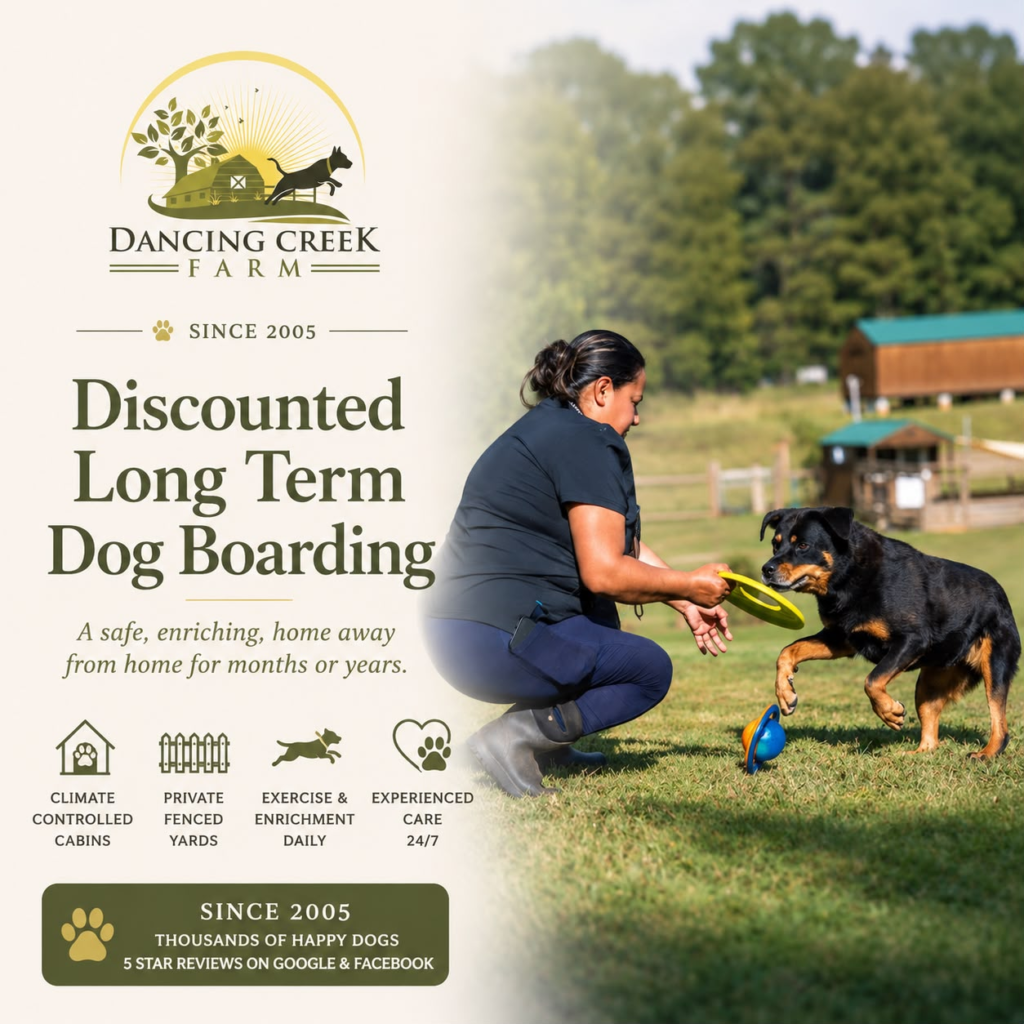
Instead of a traditional kennel environment, we offer climate-controlled dog cabins, each with its own private fenced play yard. Dogs can enjoy fresh air and outdoor time while still having a comfortable, temperature-controlled indoor space.

Our farm also features large fenced pastures where dogs can stretch their legs, explore and enjoy full-on runs.

Daily care can include:

  • Individual attention from experienced dog handlers
  • Outdoor exercise and play
  • Canine enrichment activities
  • Fetch, sniffing and breed-appropriate activities
  • Large fenced areas for running and exploring
  • Premium nutrition
  • Supplements when appropriate
  • Rest and downtime
  • Lots of affection and human interaction

Most importantly, Dancing Creek Farm is staffed 24/7 by experienced dog handlers

For us, long-term boarding is about caring for the whole dog—physically, mentally and emotionally.

A Special Long-Term Boarding Setup for Small Dogs

Small dogs sometimes need a different environment than their larger counterparts.

Dancing Creek Farm has a special small-dog area adjoining the main house, allowing our team to provide closer supervision and a comfortable environment designed with little dogs in mind.

Whether your dog is staying for three months or three years, we work to create a routine that helps them feel secure and at home.

Affordable Monthly Dog Boarding for 3 Months to 3+ Years

Long-term boarding can become extremely expensive when calculated using standard daily kennel rates.

That’s why Dancing Creek Farm offers an affordable monthly long-term boarding option for dogs staying three months or longer.

Some dogs stay with us for a few months. Others stay six months, a year, or even one to three years or longer.

Every family’s situation is different, and our long-term program was designed around that reality.

Long-Term Dog Boarding With Transportation

Distance shouldn’t automatically prevent you from choosing the environment you want for your dog.

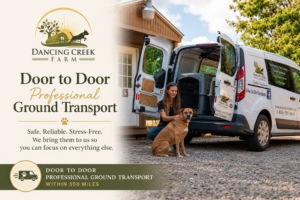
Dancing Creek Farm offers door-to-door dog transportation or halfway meeting options within approximately a 500-mile radius of Danville, Virginia

That makes our long-term boarding program accessible to families throughout Virginia and many areas of the East Coast and Mid-Atlantic.

Depending on your location and circumstances, our team can arrange to pick up your dog at your home or meet you partway.

Live More Than 500 Miles Away? We Have Options.

We regularly work with families traveling long distances or going overseas.

If you live outside our typical 500-mile transportation radius, contact us. We can help explore options that make getting your dog to Dancing Creek Farm easier.

One option is flying your dog into Raleigh-Durham International Airport (RDU), where arrangements can be made for our team to pick up your dog.

For customers driving to Dancing Creek Farm before an extended overseas trip, arrangements may also be available to leave your vehicle at the farm while we transport you to the airport.

Our goal is to remove as much of the logistical stress as possible—especially when you’re already preparing for a deployment, overseas assignment or major life transition.

Private WhatsApp Updates While You’re Away

Leaving your dog for months can be emotional, even when you know they’re in good hands.

That’s why our long-term customers are added to a private WhatsApp group with members of our team.

We share photos, videos and updates so you can see what your dog is doing and stay connected while you’re away.

For someone on the other side of the country—or the other side of the world—seeing their dog running through the pasture, relaxing in their cabin or enjoying time with our team can make the separation a little easier.

Military Deployment Dog Boarding

Military families have been an important part of Dancing Creek Farm since we opened in 2005.

We understand that deployments, training assignments and overseas orders can create a unique challenge:

Where will my dog live while I’m gone?

There are wonderful organizations helping military families find volunteer foster homes. One example is Dogs on Deployment, which operates the Hero Pet Boarding Network connecting eligible military pet owners with volunteer boarders.

Programs like these are an important resource and may be an excellent first option for qualifying families. However, volunteer availability isn’t guaranteed, and not every dog or situation ultimately results in a foster placement.

For families who cannot secure a volunteer foster—or who prefer a professional, staffed long-term boarding environment—Dancing Creek Farm offers another option.

Paws Waiting for Heroes

Through our Paws Waiting for Heroes program, we provide special long-term boarding discounts for deployed military members.

We are proud to give service members another dependable option when deployment means being separated from the dogs they love.

Our professional long-term boarding program provides consistency, 24/7 staffing, exercise, enrichment and ongoing communication throughout the dog’s stay.

We believe military families should be able to fulfill their service commitments without facing the heartbreaking possibility of giving up a beloved dog because they couldn’t find appropriate long-term care.

Why Families Choose Dancing Creek Farm for Long-Term Dog Boarding

Since 2005, thousands of dogs and their families have trusted Dancing Creek Farm.

Our 5-star reviews on Google and Facebook reflect something we’ve spent more than two decades building: relationships with families who want something different from traditional boarding.

We aren’t trying to recreate a standard kennel in the country.

We’ve created a farm environment where dogs can have space, structure, enrichment, experienced supervision and a routine of their own while their families are away.

Climate-controlled cabins. Private fenced yards. Huge fenced pastures. Experienced handlers. 24/7 staffing. Premium nutrition. Enrichment. Transportation options. Regular updates.

And most importantly, people who genuinely know and care about dogs.

Planning an Extended Trip, Deployment or Overseas Assignment?

Don’t wait until the last minute to arrange long-term care.

Whether you need long-term dog boarding for three months, six months, a year, several years or an uncertain amount of time, talk with us about your situation.

We work with families throughout Virginia and across the East Coast, and transportation options may make Dancing Creek Farm possible even when you live hundreds of miles away.

Your life may be taking you somewhere your dog can’t follow right now.

That doesn’t mean they can’t have a wonderful life while they wait for you to come home.

Learn more about long-term dog boarding, transportation and Dancing Creek Farm at:

dancingcreekfarm.com

Serving long-term boarding families from Danville, Virginia and throughout the East Coast since 2005.