Walking your dog should be one of the simplest ways to spend time together. But when your dog constantly pulls, lunges ahead, or tries to control the direction of every walk, something that should be enjoyable can quickly become frustrating.
Leash pulling is one of the most common problems dog owners experience. Some dogs pull because they are excited. Others want to reach another dog, chase a smell, investigate their surroundings, or simply move faster than their handler. Some dogs have never learned that walking calmly beside a person is an expected behavior.
The good news is that leash pulling is a trainable behavior.
A professional dog training service in VA can help identify why a dog is pulling and create a structured training plan that teaches the dog how to walk with better focus, communication, and control.
At Dancing Creek Farm, leash skills are part of the practical obedience work we provide. Our training programs include loose-leash work, basic obedience, impulse control, confidence building, and real-world exposure. The goal is not simply to make a dog walk beside someone for a few minutes. The goal is to help the dog understand how to respond to their handler in everyday situations.
Why Do Dogs Pull on the Leash?
Before trying to stop leash pulling, it helps to understand why it happens.
Dogs do not usually pull because they are trying to make their owners frustrated. Pulling is often a learned behavior that has become rewarding over time.
For example, imagine a dog sees another dog across the street. The dog pulls toward the other dog, and the owner eventually moves forward. From the dog’s perspective, pulling worked.
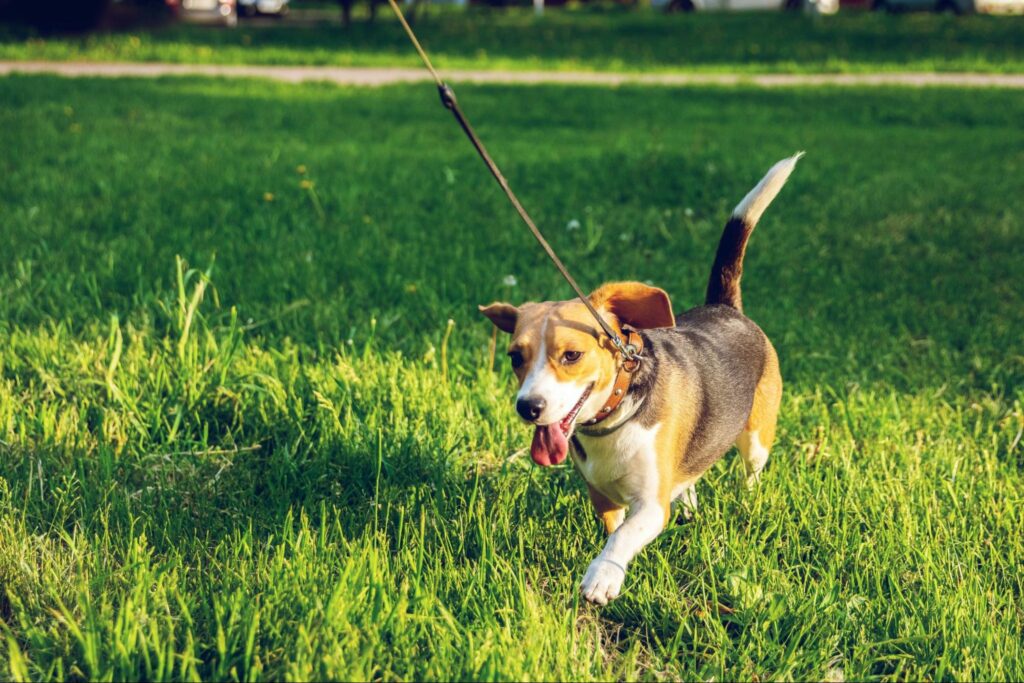
The same thing can happen with:
- Interesting smells
- Squirrels or wildlife
- Other dogs
- People
- New environments
- Open spaces
- Favorite walking locations
- Exciting sounds
- Food or other distractions
Over time, the dog can learn that pulling is the fastest way to reach something interesting.
This is why simply holding the leash tighter does not always solve the problem. The dog needs to learn an alternative behavior.
What Is Loose Leash Walking?
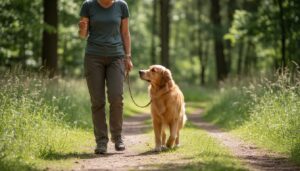
Loose leash walking means the leash remains reasonably relaxed instead of constantly being pulled tight.
It does not necessarily mean your dog must stay perfectly beside your leg every second of the walk.
A dog can sniff, explore, and enjoy the environment while still learning to respond when the handler changes direction, slows down, stops, or gives a cue.
Good loose leash walking gives the dog more freedom while also creating better communication between the dog and the person holding the leash.
This is an important distinction because successful leash training is not about preventing a dog from exploring. It is about teaching the dog when exploration is appropriate and when they need to pay attention to their handler.
Why Leash Pulling Can Become a Bigger Problem
A dog that pulls occasionally may not seem like a serious concern.
But consistent pulling can create several challenges.
It Can Make Walks Physically Difficult
A strong dog pulling forward can put considerable pressure on the person’s arms, shoulders, and back.
For older adults, children, or people with limited strength, controlling a powerful dog can become especially difficult.
It Can Reinforce Excitement
Every time a dog pulls toward something exciting, the behavior can become stronger.
The dog learns that intense excitement followed by pulling eventually gets them closer to what they want.
It Can Affect Safety
A dog that suddenly pulls toward a road, another animal, or an unfamiliar person can create a dangerous situation.
Reliable leash skills give owners more control when unexpected distractions appear.
It Can Make Walks Less Enjoyable
When every walk becomes a struggle, owners may start taking fewer walks.
That can reduce opportunities for physical exercise, mental stimulation, and quality time between dogs and their families.
How Professional Dog Training Helps With Leash Pulling
A professional trainer can look beyond the pulling itself.
Instead of asking only, “How do I stop my dog from pulling?” a trainer can ask:
- What causes the pulling?
- How intense is the behavior?
- Does the dog pull everywhere or only in certain places?
- Does the dog become excited around other dogs?
- Does the dog understand basic obedience?
- Can the dog focus on the handler around distractions?
- Is fear contributing to the behavior?
- Does the owner know how to respond consistently?
This broader assessment helps create a training program suited to the individual dog.
A professional dog training service in VA can then work on the foundation skills that make better leash behavior possible.
1. Building Attention and Engagement
A dog cannot consistently follow leash guidance if they are completely focused on everything except their handler.
Training often begins with engagement.
The dog learns that paying attention to the person walking them is valuable.
This may involve simple exercises such as responding to their name, making eye contact, following a handler’s movement, or changing direction when asked.
The goal is to establish communication before adding major distractions.
2. Teaching Better Impulse Control
Impulse control is an important part of leash training.
A dog may know how to sit in a quiet room but still struggle to control themselves when they see a squirrel or another dog.
Training can teach the dog to pause before rushing toward something exciting.
This same skill can help with:
- Doorway manners
- Greeting people
- Waiting for food
- Getting in and out of vehicles
- Walking past distractions
- Settling in public places
Better impulse control can make leash behavior much more reliable.
3. Improving Leash Manners Through Consistency
Dogs learn from patterns.
If pulling sometimes gets them where they want to go and sometimes does not, the behavior can remain difficult to change.
Consistent handling helps the dog understand what is expected.
Professional training gives owners an opportunity to learn how to respond calmly and consistently rather than reacting differently every time the dog pulls.
This is one reason owner education matters just as much as training the dog.
4. Practicing Around Real-World Distractions
A dog may walk beautifully in a quiet training area and immediately start pulling once they see another dog.
That does not mean the training failed.
It means the dog has not yet learned to generalize the behavior.
Real-world practice helps dogs understand that leash skills apply in different environments.
Depending on the dog’s needs, training may eventually include:
- Quiet outdoor areas
- Walking paths
- Parks
- Public spaces
- New environments
- Other dogs at a safe distance
- Everyday household situations
At Dancing Creek Farm, real-world exposure is part of the training philosophy. The goal is to help dogs use their skills beyond a controlled training environment.
5. Teaching the Dog How to Respond to Direction
A dog that constantly chooses the direction of the walk can become difficult to manage.
Professional training can help establish clearer communication around changes in direction, stopping, starting, and pace.
The dog learns that the person holding the leash is part of the walking experience and that paying attention to that person leads to predictable outcomes.
This does not require turning every walk into a formal obedience session.
Instead, small moments of communication can be incorporated into normal walks.
The Role of Balanced Dog Training
Different dogs respond differently to training.
At Dancing Creek Farm, balanced dog training is based on communication, structure, positive reinforcement, and appropriate guidance. The approach is individualized rather than assuming every dog needs exactly the same training plan.
For leash pulling, this can mean rewarding appropriate walking behavior while providing clear guidance when the dog becomes distracted or starts pulling.
The important part is that the dog understands what is expected.
Training should not be about frightening a dog into compliance. It should help the dog learn how to make better choices and understand the communication coming from the handler.
Owners should also understand the tools being used and how to use them correctly. Professional instruction is especially important when training equipment is involved.
Why Some Dogs Need More Than a Few Training Sessions
Not every leash-pulling dog has the same problem.
A young dog that has never learned leash skills may improve relatively quickly with consistent practice.
Another dog may have spent years pulling toward other dogs, people, wildlife, or environmental distractions.
A dog that also lunges, becomes highly aroused, or shows fear on walks may need a more comprehensive training plan.
That is where professional assessment becomes particularly valuable.
At Dancing Creek Farm, training options include private training and board-and-train programs. The appropriate option depends on the dog’s behavior, the owner’s goals, and the level of training required.
The goal should always be realistic progress rather than promising an instant transformation.
Private Training for Leash Pulling
Private training can be useful for owners who want to participate directly in their dog’s training.
It gives the trainer an opportunity to observe the dog and handler together.
This matters because sometimes the dog understands the exercise, but the owner is unintentionally giving mixed signals.
Private training can help owners learn:
- How to hold and manage the leash
- How to recognize early signs of excitement
- How to redirect attention
- How to reinforce calm behavior
- How to practice around distractions
- How to maintain consistency at home
Dancing Creek Farm offers private training at the farm and can also use real-world environments as follow-up practice when appropriate.
Board and Train for Dogs That Need More Structure
Some families prefer an immersive training experience.
A board-and-train program allows a dog to spend more time in a structured environment where training can become part of the daily routine.
This can be particularly useful for dogs that need more intensive work on obedience, leash skills, impulse control, or household manners.
However, board and train should not be viewed as a substitute for owner involvement.
When the dog returns home, the family needs to understand the training and continue reinforcing the desired behaviors.
At Dancing Creek Farm, owner communication and follow-up are an important part of the training process.
A Practical Example From Dancing Creek Farm
One example shared by Dancing Creek Farm involved a shepherd named Gracie.
Gracie had been pulling her owner during walks and had also become territorial and leash reactive around other dogs. Her behavior made normal walks stressful because encountering another dog could lead to pulling, barking, or lunging.
After spending time at Dancing Creek Farm, her owner reported a noticeable change in her walking behavior and confidence.
During a later hike, Gracie encountered other people with dogs. According to the owner’s testimonial, she became alert but did not bark, lunge, or pull toward the other dogs.
This example illustrates an important point about leash training: the goal is not simply to make a dog walk nicely when nothing interesting is happening.
The real test is whether the dog can use their training when something exciting or distracting appears.
Every dog will progress differently, and one dog’s experience should not be treated as a guaranteed result for another dog. Training plans should be based on the individual dog’s behavior, temperament, environment, and goals.
How Owners Can Reinforce Leash Training at Home
Professional training creates a foundation, but daily habits matter.
Here are some simple ways owners can support better leash behavior.
Keep Training Sessions Short
You do not need to turn every walk into a long training session.
A few focused minutes can be valuable.
Practice attention, stopping, changing direction, and calm walking before allowing your dog to continue exploring.
Reward the Behavior You Want
Notice when your dog is walking calmly.
Do not wait only for mistakes before interacting with your dog.
Calm walking, checking in with you, and responding to a cue are behaviors worth reinforcing.
Avoid Practicing Only in Easy Environments
Once your dog understands the basics, gradually introduce distractions.
Do not immediately take a dog that struggles around other dogs into the busiest dog park.
Increase difficulty gradually.
Stay Consistent
Everyone in the household should follow the same basic rules.
If one person allows pulling while another person does not, the dog receives conflicting information.
Consistency makes learning easier.
Give Your Dog Appropriate Exercise and Enrichment
Some dogs are easier to train when their physical and mental needs are being met.
Exercise, enrichment, rest, and routine can all influence how a dog handles training.
However, exercise alone does not replace leash training. A physically tired dog can still pull if they have never learned how to walk calmly.
When Should You Get Professional Help for Leash Pulling?
Consider professional help if:
- Your dog is strong enough to pull you off balance.
- Your dog repeatedly lunges at people or dogs.
- Your dog becomes extremely excited outside.
- You avoid walking because the experience is stressful.
- Your dog ignores you around distractions.
- You have tried training consistently without meaningful progress.
- You are unsure how to use training equipment safely.
- You are worried that pulling could create a safety problem.
Early guidance can prevent a frustrating habit from becoming even more established.
If leash pulling is accompanied by aggression, severe fear, or other serious behavioral concerns, an experienced professional should assess the situation and determine what type of support is appropriate.
Why Leash Training Is About More Than Walking
Good leash behavior can change everyday life.
A dog that can walk calmly is easier to take:
- Around the neighborhood
- On hikes
- To pet-friendly businesses
- On family outings
- To training classes
- On vacations
- Around visitors and other dogs
More importantly, leash training can improve communication between the dog and owner.
Instead of constantly fighting against the leash, the owner can begin to trust the dog to respond to direction.
That creates a calmer experience for both ends of the leash.
What to Look for in a Professional Dog Training Program
When choosing a trainer, look beyond promises of quick results.
Ask questions such as:
- How do you evaluate my dog’s behavior?
- What training methods do you use?
- How will you address leash pulling?
- Will my dog practice around distractions?
- How will I learn to maintain the training?
- What happens after the program ends?
- Can I see how the training works?
- Is the program appropriate for my dog’s specific behavior?
A quality program should be willing to explain its approach clearly.
At Dancing Creek Farm, training is designed around communication, structure, confidence, and real-world skills. Families receive regular updates during training, and the team provides continued communication so owners can better understand how to maintain the work after their dog returns home.
Final Thoughts
Leash pulling is frustrating, but it does not have to define every walk you take with your dog.
The key is to understand why the behavior is happening and teach your dog what you want them to do instead.
A professional dog training service in VA can provide the assessment, structure, consistency, and practical guidance needed to make that process easier. Whether your dog needs private coaching, a training tune-up, or a more immersive board-and-train program, the right approach should be based on your dog’s individual needs.
At Dancing Creek Farm, leash training is part of a broader approach to helping dogs become calmer, more responsive, and better prepared for everyday life.
With consistent training and owner involvement, walks can become less of a struggle and more of what they were meant to be: time spent enjoying life together.
Frequently Asked Questions
1. Can professional dog training stop a dog from pulling on the leash?
Professional training can help reduce leash pulling by teaching dogs better focus, impulse control, and leash manners. Results vary depending on the dog’s age, history, temperament, motivation, and consistency at home.
2. How long does it take to teach a dog loose leash walking?
There is no single timeline for every dog. Some dogs improve quickly, while others need weeks or longer of consistent practice. Dogs with strong pulling habits or leash reactivity may require more structured training.
3. Is leash pulling a sign that my dog needs professional training?
Not necessarily, but professional help can be valuable if pulling is strong, persistent, difficult to manage, or accompanied by lunging, fear, or reactivity. A trainer can identify the cause and create a suitable training plan.
4. Can an older dog learn better leash manners?
Yes. Older dogs can learn new behaviors. The training process may need to account for established habits, physical limitations, motivation, and previous experiences, but age alone does not prevent a dog from learning.
5. Does board and train help with leash pulling?
A board-and-train program can provide structured, repeated practice and professional guidance for leash skills. However, owners still need to learn how to maintain the training after the dog returns home. Long-term success depends on consistent reinforcement in everyday life.