Will My Dog Forget Me During Long Term Boarding? What Owners Should Know

long term boarding

Leaving your dog for several weeks or months can bring up one of the most emotional questions an owner can ask: “Will my dog forget me?”

It is a completely understandable concern. Dogs are part of the family, and their daily lives are often built around familiar people, routines, smells, and places. When that routine changes because of travel, military deployment, relocation, work, or another extended commitment, owners may worry that a long absence could weaken the bond they have built with their dog.

The good news is that long term dog boarding does not mean your dog simply forgets you.

Dogs can form strong attachments to people, and changes in a dog’s routine can affect behavior and emotions. However, a temporary separation is very different from permanently losing a familiar person. Dogs can adapt to a new routine while still maintaining their relationship with their owners.

The key is making sure the boarding experience provides safety, consistency, appropriate care, and enough positive interaction for the dog to feel secure while away.

Do Dogs Remember Their Owners After Long-Term Boarding?

Yes, dogs can recognize and remember familiar people after periods of separation.

Your dog does not need to see you every day to maintain familiarity with you. Your scent, voice, appearance, and the experiences you have shared all contribute to your relationship.

During long term dog boarding, your dog may become comfortable with new caregivers and develop a temporary routine that does not include you. That does not mean your dog has replaced you or forgotten the relationship you share.

In fact, becoming comfortable with caregivers can be a positive sign.

A dog that learns to relax, eat, sleep, exercise, and interact appropriately while boarding is demonstrating an ability to adapt to a temporary change.
Why Your Dog May Seem Different When You Pick Them Up

One thing that can surprise owners is their dog’s behavior at reunion.

Some dogs become extremely excited. They may jump, wag their tails, vocalize, or stay very close to their owner.

Other dogs may appear surprisingly calm.

That does not automatically mean the dog is no longer attached to you.

Dogs respond to reunions differently. Your dog may also be tired after travel, processing the change in routine, or simply transitioning from one environment back into another.

The important thing is to look at the overall relationship rather than interpreting one moment at pickup.

A dog that comfortably interacted with caregivers during boarding has not necessarily become less bonded to its family. It may simply have learned that it can feel safe with more than one trusted person.

A Healthy Boarding Routine Can Help Dogs Adjust

One of the most important parts of successful dog boarding adjustment is predictability.

Imagine your dog’s normal day at home.

There may be a familiar time for breakfast, walks, play, naps, bedtime, and interaction with family. When a dog enters a boarding environment, those familiar patterns change.

A thoughtful boarding program replaces uncertainty with a new routine.

That might include:

  • Consistent feeding times
  • Regular exercise
  • Predictable rest periods
  • Familiar caregivers
  • Safe outdoor activity
  • Comfortable sleeping arrangements
  • Individual attention
  • Monitoring of appetite and behavior

At Dancing Creek Farm, dogs stay in climate-controlled cabins with their own fenced yards, while the facility also provides larger fenced areas for exercise and enrichment. The farm emphasizes individualized care rather than treating every dog exactly the same.

For a dog staying several weeks or months, this consistency can become an important source of security.

Your Dog Can Be Happy Without Forgetting You

This is perhaps the most important distinction for worried owners.

A dog being comfortable at boarding is not evidence that your dog doesn’t miss you.

It is actually something owners should want.

If your dog cannot relax, eat, sleep, exercise, or interact with caregivers unless you are present, an extended separation can be much harder.

A good boarding experience gives dogs an opportunity to learn:

“My family is away, but I am still safe.”

That is very different from:

“My family no longer matters.”

The ability to adapt does not erase attachment.
What About Dogs With Separation Difficulties?

Some dogs have a particularly difficult time when separated from their owners. Others are naturally more independent.

This is one reason boarding facilities should evaluate dogs individually.

A dog’s age, temperament, previous experiences, social behavior, training, and familiarity with boarding can all influence how they respond to a new environment.

Owners should be honest during the intake process about behaviors such as:

  • Excessive distress when left alone
  • Destructive behavior
  • Persistent barking
  • Difficulty eating when separated
  • Previous negative boarding experiences
  • Fear of unfamiliar people
  • Reactivity toward dogs
  • Medical or behavioral concerns

At Dancing Creek Farm, owners are asked detailed questions about their dog’s temperament, interactions with other dogs, previous boarding or daycare experience, and why boarding is needed. This information helps the team understand the dog before the stay begins.

That individualized approach is particularly important for longer stays.

A Real Example From Dancing Creek Farm

One example that illustrates this well comes from a family whose dogs stayed at Dancing Creek Farm for five months.

According to the owner’s review, the dogs returned home healthy and happy after their extended stay. The family received regular pictures, allowing them to see how their dogs were doing throughout the boarding period.

What is particularly interesting is that the owner described the dogs as comfortable enough at the farm that they did not appear to be in a hurry to leave.

For an owner, that can initially sound almost contradictory:

“If my dog is happy there, does that mean they don’t need me anymore?”

No.

It means the dogs had successfully developed a sense of security in another environment.

The goal of quality long-term care is not to make dogs choose between their family and their caregivers. It is to help them feel safe while their family is temporarily away.

When the owners returned, the dogs could reconnect with their family while also having had a positive experience during the separation.

That is exactly the type of outcome owners should hope for.

How Owners Can Maintain the Bond During Boarding

You do not need to constantly communicate with your dog to preserve your relationship.

In fact, what matters most is the quality of the relationship you have built over time.

Before boarding, you can help by maintaining familiar habits and giving the boarding team accurate information about your dog’s routine.

You can also provide appropriate comfort items if the facility permits them.

At Dancing Creek Farm, communication is another important part of the experience. The farm says families can receive pictures and videos and can use communication options such as FaceTime or WhatsApp to stay connected.

These updates can be valuable for dog separation from the owner, particularly for the humans involved.

Sometimes the owner needs reassurance just as much as the dog needs care.
What Happens When Your Dog Comes Home?

The reunion is only one part of the transition.

After a long stay, your dog may need some time to readjust to home life.

You may notice temporary changes such as:

  • Sleeping more than usual
  • Being unusually excited
  • Wanting extra attention
  • Being slightly unsettled by changes in routine
  • Needing time to settle back into normal household patterns

Try not to expect your dog to immediately behave exactly as they did before boarding.

Instead, return to familiar routines gradually.

Feed meals at normal times, provide appropriate exercise, allow plenty of rest, and give your dog time to reconnect with the household.

The same principle that helps during dog boarding adjustment, predictability, can also help when your dog returns home.

Choosing the Right Boarding Environment Matters

Not every boarding experience is the same.

If your dog will be away for an extended period, look beyond the question of whether a facility has availability.

Ask:

  • How are dogs introduced to the environment?
  • Are individual temperaments considered?
  • Where will my dog sleep?
  • How much outdoor time is available?
  • What happens if my dog is uncomfortable around other dogs?
  • How often will staff interact with my dog?
  • How will behavioral or health concerns be communicated?
  • Will I receive updates during the stay?

At Dancing Creek Farm, dogs can have private cabins and fenced yards, including accommodations for dogs that are not comfortable in group settings. The farm also emphasizes experienced handlers, outdoor areas, enrichment, and communication with families.

For long stays, these details can make a meaningful difference.

Final Thoughts: Your Dog Doesn’t Need to Choose

The fear that your dog will forget you during Long Term Dog Boarding usually comes from a place of love.

You may imagine your dog wondering where you went, becoming attached to someone else, and eventually returning home as a completely different dog.

But a healthier way to think about boarding is this:

Your dog can learn to be comfortable without you while still loving and remembering you.

A successful boarding experience should give your dog stability during your absence, not replace the bond you share.

The goal is for your dog to have a safe, structured, positive experience while you are away and then comfortably transition back into life with you when you return.

At Dancing Creek Farm, the focus is on creating an environment where dogs can feel secure, receive individualized attention, maintain predictable routines, and enjoy their time away from home. For owners considering dog boarding in Virginia for an extended stay, choosing a facility that understands both the dog’s needs and the owner’s concerns can make the entire experience easier.

Your dog doesn’t have to forget you to enjoy their stay.

And you don’t have to feel guilty for giving them the opportunity to feel safe, confident, and cared for while you’re away.

Frequently Asked Questions

1. Will my dog forget me after long term boarding?

No. Dogs can maintain familiarity with and attachment to their owners even when separated for an extended period. A dog becoming comfortable with caregivers does not mean the relationship with its owner has disappeared.

2. How long does it take a dog to adjust to long term boarding?

Every dog is different. Some settle quickly, while others need several days or longer. Age, temperament, previous boarding experiences, and the dog’s ability to adapt to new routines can all influence the adjustment period.

3. Will my dog be sad while I am away?

Some dogs may show temporary signs of stress or changes in behavior when their routine changes. A consistent dog boarding routine, attentive caregivers, appropriate exercise, and a suitable environment can help many dogs adjust.

4. Should I stay in contact with my dog during long term boarding?

Owner updates can provide reassurance and help families feel connected. Dancing Creek Farm provides families with pictures and videos and offers communication options such as FaceTime or WhatsApp.

5. How can I make long term dog boarding easier for my dog?

Provide accurate information about your dog’s routine, temperament, food, medications, and previous experiences. Choose a boarding facility that individualizes care, maintains consistent routines, monitors behavior, and communicates with you throughout the stay.
Related Posts

What you need to know:

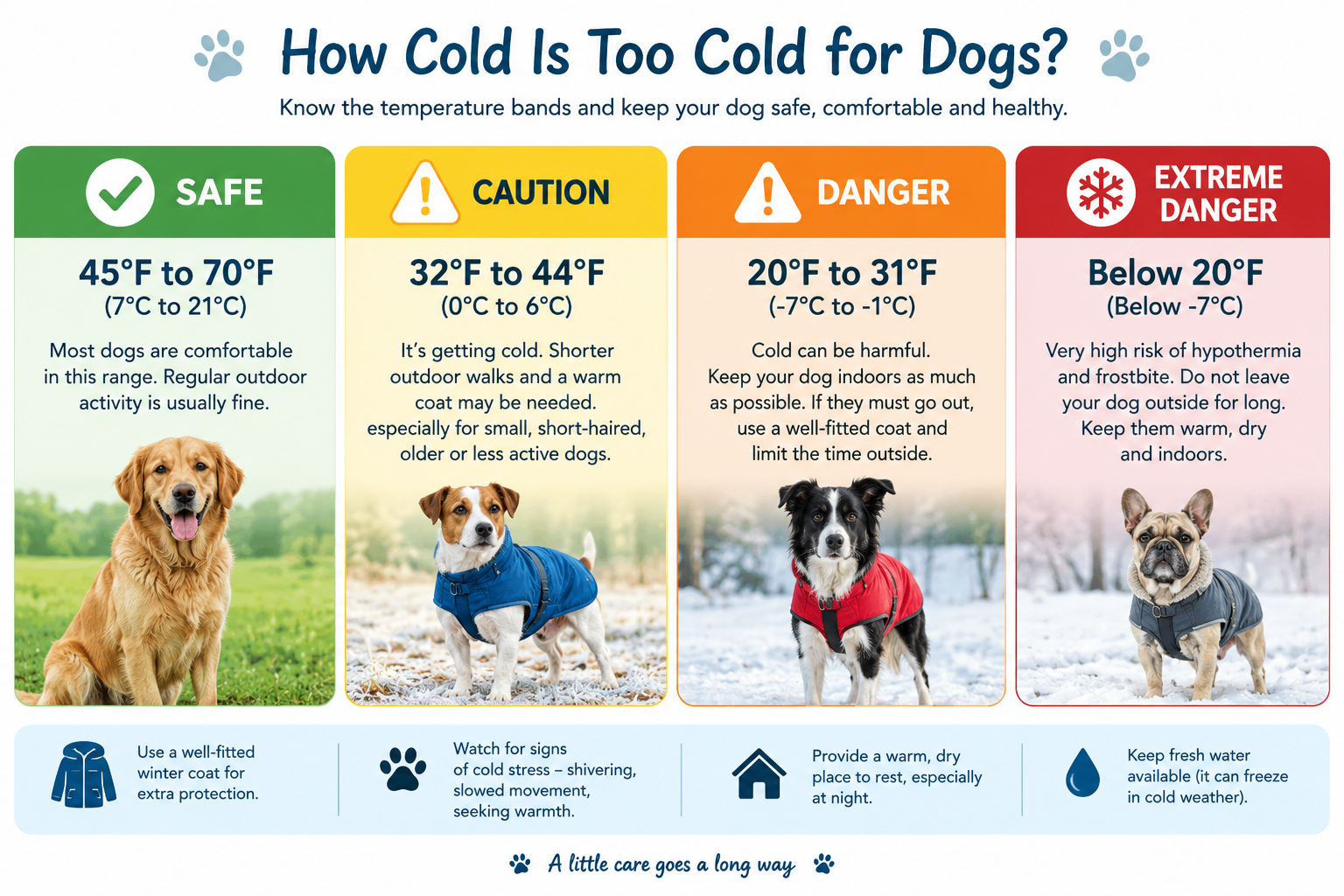
  • Most dogs are fine above 45°F. Below 32°F, watch small, thin-coated, young, and senior dogs. Below 20°F, keep most dogs to short potty breaks.
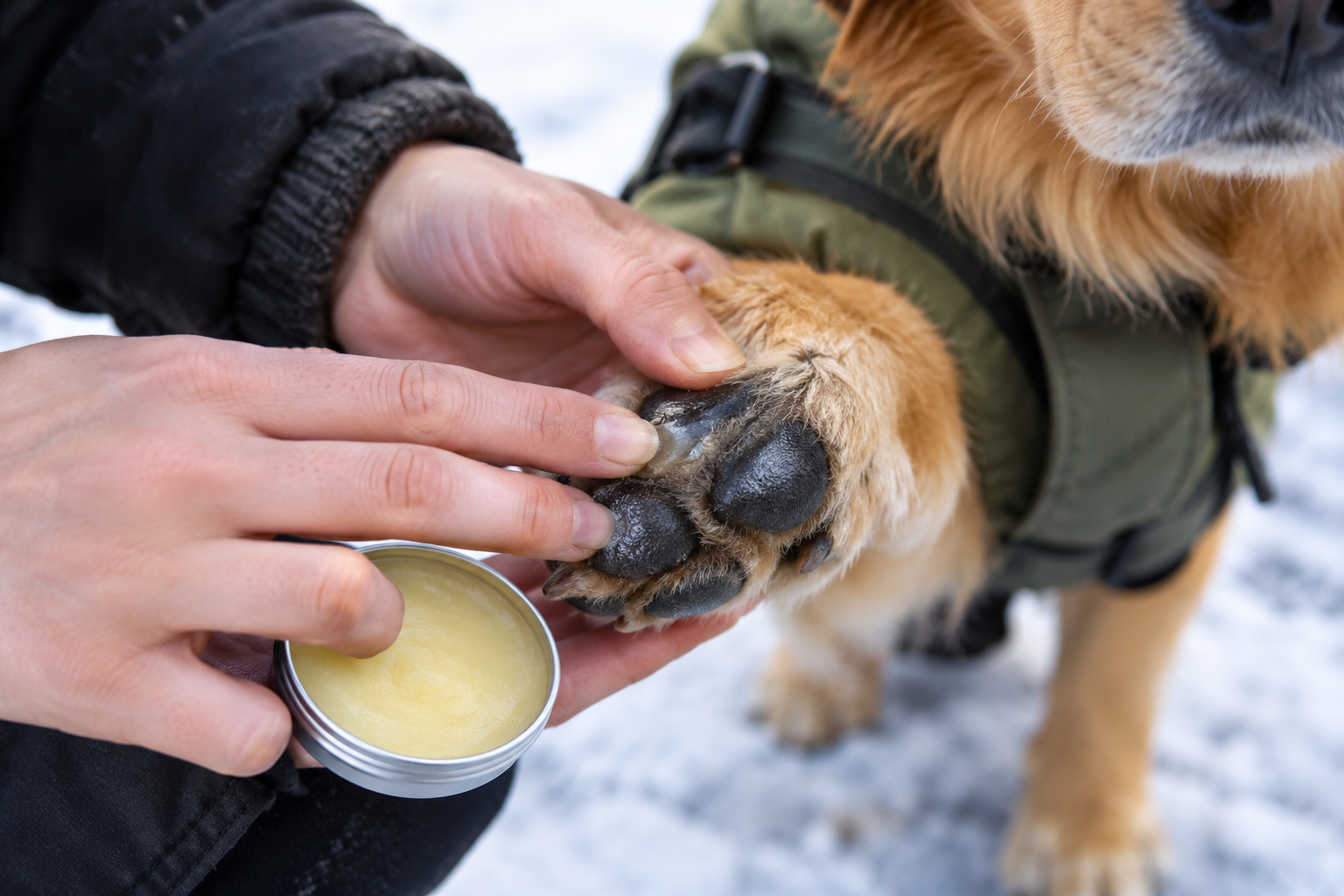
  • Paws take the most damage. Wipe off salt after walks and use a dog paw balm on dry pads.
  • Small and short-haired dogs benefit from a dog winter coat. Keep it dry, because a wet coat chills.
  • Antifreeze tastes sweet and kills. Call a vet or Pet Poison Helpline right away after any exposure.
  • Pale, gray, or bluish ears, tail, or paws can signal dog frostbite. Warm gently and see a vet.

These winter dog care tips come from routines we have run every cold season since 2005, boarding and training dogs in Southern Virginia.

Here’s the thing most owners miss: fur is not a free pass.

The American Veterinary Medical Association (AVMA, the national body for veterinarians) tells owners to learn each pet’s cold tolerance and adjust.

How cold is too cold for dogs?

Direct answer

Most healthy dogs handle temperatures down to about 45°F without trouble. From 32°F to 45°F, watch small, thin-coated, young, and senior dogs, and limit their time below freezing. At 20°F or colder, nearly every dog risks hypothermia or frostbite with long exposure.

Those bands come from veterinary guidance. Marshfield Animal Hospital, as reported by Green Matters, calls 20°F and below the danger zone. Ellevet Sciences uses the same markers in its January 2026 guide.

Treat the thermometer as a starting point, because wind and wet snow pull heat away much faster.

Columbus Humane (February 2026) points owners to the Tufts University safety scale, which adjusts risk for size, coat, moisture, and shelter.

Temperature Healthy, thick-coated adults Small, thin-coated, puppy, or senior dogs
Above 45°F Normal activity Normal activity, watch for shivering
32 to 45°F Normal activity Coat for walks, shorter outings
20 to 32°F Shorter walks, check paws Brief walks only, coat required
Below 20°F Potty breaks and short walks Potty breaks only, then inside

Color-coded chart showing safe, caution, and danger temperature ranges for dogs

Our rule of thumb is blunt. If you need gloves outside, your short-haired dog probably needs a coat and a shorter walk.

Which cold weather dog breeds cope best?

Cold weather dog breeds carry dense double coats. Chewy’s veterinary content team lists Siberian Huskies, Alaskan Malamutes, Saint Bernards, American Eskimo Dogs, and Great Pyrenees among the best.

Even they have limits. The AVMA says no pet should spend long periods outside below freezing.

The dogs who struggle most share a few traits:

  • Small size: less body mass means faster heat loss.
  • Thin coats: Greyhounds, Whippets, and Chihuahuas have little insulation.
  • Age: puppies can’t regulate temperature well, and seniors carry less muscle and fat.
  • Health conditions: the AVMA notes cold can worsen arthritis.

Do dogs need coats in winter?

Some do, many don’t. The AVMA suggests a sweater or coat if your dog has a short coat or seems bothered by cold.

A dog winter coat works like a windbreaker on a chilly hike. It makes no heat. It holds in the heat your dog already makes.

Pick one that covers the chest and belly and leaves the legs free. The AVMA warns that a wet coat can make a dog colder, so keep a dry spare.

How do you handle dog paw care in winter?

Honestly, we think paws deserve more attention than coats. Dog paw care in winter means keeping ice out, chemicals off, and pads from cracking.

Ice balls form in the fur between toes and press into pads like a pebble in your shoe. Trimming that fur level with the pads helps.

Salt and de-icers are the bigger problem. The AVMA advises wiping feet, legs, and belly after walks to remove snow, salt, and chemicals.

How do you use dog paw balm?

A dog paw balm is a wax or oil based ointment that seals and softens pad skin. Think of it as lip balm for feet.

  1. Check pads for cracks, redness, or cuts before each walk.
  2. Rub a thin layer into each pad before heading out.
  3. Rinse paws with warm water afterward and dry between the toes.
  4. Apply another thin layer at bedtime.
  5. Call your vet if a crack bleeds or your dog limps.

Booties are the alternative. The AVMA recommends them but stresses a proper fit.

Hands applying a thin layer of dog paw balm to a dog's paw pad before a winter walk

How do you keep winter dog walks safe?

Winter dog walks should be shorter and better planned, not skipped. Use this dog cold weather safety checklist:

  • Shorten the route in very cold weather, as the AVMA advises.
  • Stay leashed on snow, since the ASPCA notes dogs can lose their scent and get lost.
  • Avoid frozen ponds and streams entirely.
  • Check the ID tag, because the ASPCA reports more dogs go missing in winter than any other season.
  • Add a light for dark evenings, a habit Battersea recommends.

Icy sidewalks also make a pulling dog a fall risk. Our guide to professional dog training for leash pulling explains how we fix it.

A reliable recall matters more when snow hides scent. Start with these 7 basic dog commands.

What should you know about antifreeze and dogs?

Antifreeze and dogs are a deadly mix. Most automotive antifreeze contains ethylene glycol, a sweet tasting chemical that causes kidney failure.

Pet Poison Helpline says radiator coolant is typically about 95% ethylene glycol. Its antidote works in dogs only within 8 to 12 hours of ingestion.

Early signs look like drunkenness: wobbling, vomiting, and heavy thirst. Prevent exposure this way:

  • Store antifreeze sealed and off the floor.
  • Wipe up drips under cars right away.
  • Choose propylene glycol products, which Pet Poison Helpline calls much safer.

If you suspect exposure, call your vet or Pet Poison Helpline at 855-764-7661 now. Don’t wait for symptoms.

How do you recognize and treat dog frostbite?

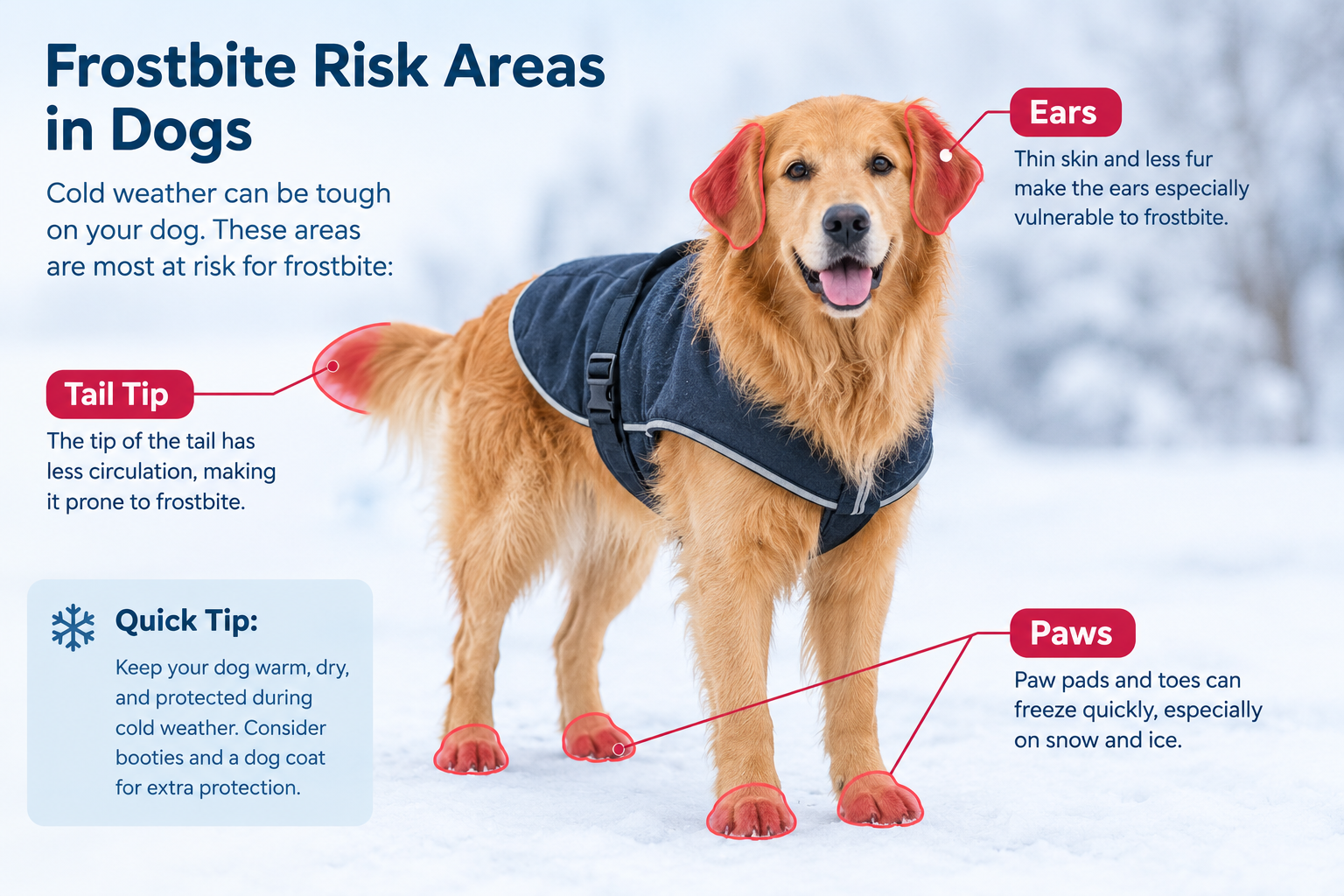
Dog frostbite is cold damage to skin and tissue, usually on the paws, ears, and tail. VCA Animal Hospitals says damp areas are more vulnerable.

Look for pale or bluish skin, coldness, swelling, blisters, or blackened patches. VCA notes signs can take several days to appear.

  1. Move your dog somewhere warm and dry.
  2. Wrap them in towels warmed in the dryer.
  3. Don’t rub the area.
  4. Skip human pain relievers, which VCA warns can be toxic.
  5. Get to a veterinarian quickly.

Hypothermia is the whole-body version. Chewy’s vets note shivering can stop as it worsens, so a still dog isn’t necessarily recovering.

These tips are guides, not guarantees. VCA links heart disease and diabetes to higher frostbite risk, so dogs with those conditions need a plan from your own vet.

Diagram of a dog highlighting the ears, tail tip, and paws as the areas most prone to frostbite

What does keeping dogs warm outside actually require?

Keeping dogs warm outside takes an insulated, dry shelter, bedding, and unfrozen water. In extreme cold, the AVMA says even outdoor dogs should come inside.

Virginia law sets a floor. Since July 1, 2020, Virginia Code § 3.2-6500 says tethering alone isn’t adequate shelter at 32°F or below.

On our farm, dogs sleep in insulated, climate controlled cabins with elevated beds and fresh blankets. Each cabin opens onto its own fenced yard. Our breakdown of private boarding cabins vs group boarding shows why that layout matters.

On frosty Virginia mornings, dogs may need a little extra care before heading outside. At Dancing Creek Farm, winter routines should reflect each dog’s comfort, coat type, and energy level. Short-haired dogs may benefit from a warm coat and shorter outdoor sessions, followed by time to relax in a comfortable, climate-controlled cabin. It’s the little things that matter, helping every dog stay comfortable, safe, and happy throughout the colder months.

Traveling this winter? Your dog can stay warm and busy in a climate controlled cabin while you’re away. See our short-term dog boarding in Virginia.

Frequently asked questions

How long can a dog stay outside in cold weather?

It depends on size, coat, and conditions. Below 20°F, most dogs should get potty breaks and short walks only. Bring your dog in at the first sign of shivering, lifted paws, or slowing down.

Is it safe for dogs to sleep outside in winter?

For most pet dogs, no. The AVMA recommends keeping dogs inside in cold weather. An outdoor dog needs an insulated, windproof shelter off the ground, dry straw bedding, and unfrozen water. In Virginia, tethering alone is not adequate shelter at 32°F or below.

Is road salt bad for dogs’ paws?

Yes. Rock salt dries and irritates pads, and dogs swallow residue when they lick their feet. Rinse paws, legs, and belly after winter walks. On your own steps and driveway, use a pet-safe ice melt, which the AVMA recommends.

Is Vaseline safe for dog paws?

Some owners use it, but a balm made for dogs is the better choice. Dogs lick their paws, so whatever you apply gets swallowed. Ask your vet before putting any human product on cracked or bleeding pads.

Do dogs need more food in winter?

Active outdoor dogs often do. The ASPCA says pets burn extra energy staying warm, so a little more food can help. Less active indoor dogs may need less. Ask your vet before making big changes.

The bottom line on winter dog care

  • Use 45°F, 32°F, and 20°F as check-in points, then adjust for wind and wet.
  • Make paw checks, rinsing, and dog paw balm a daily habit.
  • Coat small and short-haired dogs, and keep the coat dry.
  • Lock up antifreeze and act within hours after any exposure.
  • Never leave a dog outside or in a car in extreme cold.

Planning holiday travel? Read how we prepare your dog for boarding, or request a reservation and tell us about your dog.

This article shares general care guidance from experienced dog handlers. It is not veterinary advice. Contact your veterinarian about your own dog, especially in an emergency.

Teaching your dog basic commands is one of the most important steps toward building a happy, safe, and healthy relationship. Whether you have a playful puppy, an energetic adult dog, or an older companion, learning simple commands can make everyday life easier. From walking politely on a leash to coming when called, these skills help dogs understand what you expect from them and respond more confidently in different situations.

However, dog training is about more than teaching your pet to follow instructions. It also helps build communication, improve impulse control, and encourage better behavior at home and in public. With patience, consistency, and the right approach, even dogs that struggle to focus can gradually develop useful obedience skills.

At Dancing Creek Farm, dog training focuses on communication, structure, confidence, and practical skills that help dogs succeed in everyday environments. Whether your dog needs help with basic manners or more structured obedience work, starting with the fundamentals can make a meaningful difference.

In this guide, we will explore seven essential dog commands every dog should know, how to teach them, common training mistakes to avoid, and when professional support may help.

Why Are Basic Dog Commands Important?

Basic commands give dogs clear guidance about how to behave in different situations. They are useful during walks, mealtimes, visits from guests, car rides, and interactions with unfamiliar environments.

Here are some important benefits of teaching your dog obedience commands:

  • Improved safety: Commands such as “come” and “stay” can help you manage your dog around potential hazards.
  • Better communication: Your dog learns to associate specific words and cues with expected behaviors.
  • Stronger relationships: Consistent, fair training helps build trust between dogs and their owners.
  • Improved manners: Commands can help reduce jumping, pulling, rushing through doors, and other unwanted behaviors.
  • Greater confidence: Predictable guidance can help dogs feel more comfortable when learning new skills.

Remember that knowing a command does not mean a dog will respond perfectly in every situation. Dogs may perform well at home but struggle in a busy park or around other animals. Training needs to progress gradually so your dog can learn to respond in different environments.

1. Sit: The Foundation of Dog Obedience Training

“Sit” is one of the easiest and most useful commands to introduce. It encourages your dog to pause and focus instead of immediately acting on excitement.

You can use this command before putting on a leash, serving meals, greeting visitors, or opening a door.

How to teach your dog to sit

  1. Stand in front of your dog in a quiet, familiar area.
  2. Hold a small treat near your dog’s nose.
  3. Slowly move the treat upward and slightly toward the back of the dog’s head.
  4. As your dog naturally lowers its hindquarters, say “sit.”
  5. Reward the behavior immediately with praise or a treat.
  6. Repeat several times in short sessions.

If your dog jumps toward the treat, move your hand more slowly and keep the reward close to its nose.

Common mistake to avoid

Do not repeatedly say “sit, sit, sit” when your dog does not respond. Give the cue once, allow your dog a moment to process it, and help it succeed with a clear hand signal or a simpler setup.

With regular practice, your dog can begin sitting before meals, during greetings, and whenever you need a brief pause.

2. Stay: Teaching Patience and Self-Control

The “stay” command teaches your dog to remain in a particular position until you give a release cue. It can be useful when answering the door, preparing food, or organizing your dog’s leash before a walk.

For many dogs, staying still is harder than sitting because it requires patience and impulse control.

How to teach your dog to stay

  1. Ask your dog to sit or lie down.
  2. Say “stay” once and briefly pause.
  3. Reward your dog if it remains in position.
  4. Take one small step away, then return and reward it.
  5. Gradually increase the duration and distance as your dog becomes more reliable.
  6. Introduce a consistent release word, such as “free,” to signal that the exercise has ended.

Begin with just one or two seconds. A short, successful stay is more valuable than asking for a long stay that your dog cannot yet manage.

When should you practice stay?

Practice during calm moments at home before using the command around distractions. Once your dog understands the exercise, gradually introduce new locations and mild distractions.

Never rely on “stay” alone to protect your dog near traffic or other serious hazards. Use a secure leash and appropriate physical barriers whenever necessary.

3. Come: An Essential Recall Command

“Come” is one of the most important commands for dog safety. It teaches your dog to return to you when called, even when something interesting catches its attention.

Reliable recall can be especially helpful when a dog becomes distracted by wildlife, unfamiliar people, other dogs, or exciting outdoor activities.

However, recall takes time to develop. Dogs naturally want to investigate new smells and surroundings, so returning to their owners must become a rewarding habit.

How to teach your dog to come

  1. Start indoors or in a securely fenced area with minimal distractions.
  2. Say your dog’s name followed by “come” in a cheerful, clear voice.
  3. Take a few steps backward to encourage your dog to approach.
  4. When your dog reaches you, reward it immediately with praise, a treat, or a favorite toy.
  5. Repeat the exercise from gradually greater distances.
  6. Practice with a long training line in a safe outdoor area before introducing more distractions.

Always make returning to you a positive experience. Avoid calling your dog to you only when something enjoyable is about to end, such as leaving the park every time.

Why recall matters

A dog that responds to recall is easier to manage during outdoor activities and everyday routines. Nevertheless, no command is completely reliable in every situation. Keep your dog leashed in public areas where required and around roads, livestock, wildlife, or other hazards.

4. Down: Encouraging Calm Behavior

The “down” command teaches your dog to lie down when asked. It can help during quiet time at home, visits with friends, and situations where you want your dog to settle rather than move around constantly.

Some dogs find this command easy, while others may feel uncomfortable lying down on unfamiliar surfaces. Be patient and allow your dog to learn at a comfortable pace.

How to teach your dog down

  1. Ask your dog to sit if it already knows that command.
  2. Hold a treat near its nose.
  3. Slowly guide the treat toward the floor between its front paws.
  4. Move the treat slightly forward so your dog follows it into a lying position.
  5. As the dog lies down, say “down” and reward it.
  6. Repeat in short sessions until your dog begins responding to the verbal cue.

If your dog stands up instead of lying down, make the movement slower or try again from a comfortable starting position.

How this command helps at home

A dog that understands “down” can learn to settle while the family eats dinner, watches television, or welcomes visitors. Over time, you can pair the command with a mat or designated resting area.

Remember that a dog lying down on command is not necessarily relaxed. Watch its body language and avoid forcing a fearful or uncomfortable dog into a position.

5. Leave It: Preventing Unwanted Choices

Dogs explore the world with their noses and mouths. Unfortunately, that curiosity can lead them toward dropped food, household objects, rubbish, or other potentially dangerous items.

“Leave it” teaches your dog to disengage from something and pay attention to you instead.

How to teach leave it

  1. Place a low-value treat in your closed hand.
  2. Allow your dog to sniff your hand without opening it.
  3. Wait until your dog briefly stops investigating or looks away.
  4. Mark the desired behavior with a word such as “yes,” then reward with a different treat from your other hand.
  5. Add the verbal cue “leave it” once your dog begins understanding the exercise.
  6. Gradually practice with different objects and situations while maintaining appropriate supervision.

Do not begin by placing dangerous objects in front of your dog or allowing it to grab something unsafe for practice.

Why leave it is useful

This command helps develop impulse control and gives your dog an alternative to immediately investigating every object.

If your dog already has something dangerous in its mouth, “leave it” may not be enough. A separately trained “drop it” cue can help teach your dog to release an object safely. If an item may be toxic or harmful, contact a veterinarian promptly rather than relying on training alone.

6. Heel: Building Better Leash Manners

Walking a dog that constantly pulls on the leash can turn a relaxing outing into a frustrating experience. The “heel” command teaches a dog to walk close to its handler with attention and control.

A formal heel usually means the dog stays beside the handler in a defined position. It is different from a relaxed walk on a loose leash, where the dog has more freedom to sniff and explore without pulling.

Both skills are valuable, and the best choice depends on your dog’s needs and the situation.

How to teach your dog to heel

  1. Begin in a quiet area with your dog wearing a properly fitted harness or collar suitable for its training needs.
  2. Choose the side on which you want your dog to walk.
  3. Hold a reward near your leg to encourage the correct position.
  4. Say “heel” and take a few steps.
  5. Reward your dog when it stays near you without pulling.
  6. Practice short turns and changes of direction.
  7. Gradually introduce mild distractions as your dog improves.

Keep early sessions brief. If your dog becomes overly excited, increase your distance from the distraction or return to a quieter area.

What if your dog keeps pulling?

Avoid turning every walk into a battle. Pulling can be influenced by excitement, fear, frustration, learned habits, or the environment.

Reward your dog for walking beside you, maintain a manageable pace, and practice in places where your dog can focus. If pulling is severe or accompanied by lunging and reactivity, professional guidance may help identify the underlying issue.

Dancing Creek Farm offers professional dog training that includes loose-leash skills and obedience foundations. Learn more about our dog training services in Virginia.

7. Place: Teaching Your Dog Where to Settle

The “place” command teaches your dog to go to a designated location, such as a dog bed or mat, and remain there until released.

It can be particularly useful for dogs that jump on guests, follow family members everywhere, or struggle to settle when something exciting happens.

Unlike “sit” or “down,” place connects the behavior to a specific location.

How to teach place

  1. Choose a comfortable mat or dog bed in a quiet area.
  2. Encourage your dog to step onto the mat using a treat or a familiar hand signal.
  3. As your dog reaches the mat, say “place” and reward it.
  4. Encourage your dog to sit or lie down on the mat if appropriate.
  5. Reward brief periods of remaining there.
  6. Gradually increase the duration before giving your release cue.

Practice when your dog is calm before using place during busy moments, such as family meals or visitor arrivals.

How place improves household manners

A dog that understands place can have a predictable spot to settle while the family cooks, works, or receives guests. It can also help establish boundaries without constantly telling the dog to move away.

Start with short periods and build gradually. Do not use the mat as punishment or expect a dog to remain there for longer than it can comfortably manage.

How to Make Dog Training More Effective

Learning seven commands is a useful starting point, but the way you practice matters just as much as the commands themselves.

Keep training sessions short

Several short sessions throughout the day are often easier for dogs than one long lesson. Begin with a few minutes and stop before your dog becomes frustrated or loses interest.

Use rewards that motivate your dog

Food rewards, praise, toys, and play can all help reinforce desirable behavior. Choose rewards that suit your dog’s preferences and health needs.

Reward the behavior you want as soon as possible so your dog can understand what earned the reward.

Be consistent with commands

Choose clear verbal cues and make sure everyone in the household uses them consistently. If one person says “down” to mean lie down while another uses it to mean get off the sofa, the dog may become confused.

Practice in different environments

A dog may understand “come” in the kitchen but ignore it in the yard. This does not always mean the dog has forgotten the command. The outdoor environment may simply be more distracting.

Practice in progressively more challenging settings, adjusting the distance and distractions to your dog’s current ability.

Avoid punishment and unrealistic expectations

Dogs learn at different rates. Fear, stress, fatigue, pain, and unfamiliar surroundings can all affect performance.

Use clear instructions, appropriate rewards, and calm guidance. If your dog’s behavior changes suddenly or it appears reluctant to perform a familiar movement, consult a veterinarian to rule out pain or illness.

When Should You Consider Professional Dog Training?

Home practice can establish a strong foundation, but some dogs need additional guidance. Professional training may be helpful when your dog:

  • Pulls strongly on the leash or lunges at distractions.
  • Ignores recall commands outdoors.
  • Becomes overly excited around visitors.
  • Struggles with impulse control and household boundaries.
  • Appears fearful or overwhelmed in unfamiliar environments.
  • Understands commands at home but cannot perform them consistently elsewhere.

A qualified trainer can assess your dog’s behavior, identify practical training goals, and help you develop a consistent plan. For fear, aggression, or severe anxiety, look for an appropriately qualified professional who can work with your veterinarian when needed.

Dancing Creek Farm offers private training and board-and-train options for dogs with different training needs. Programs include basic obedience, leash manners, household behavior, and more advanced work depending on the dog’s individual circumstances.

Explore our professional dog training programs to learn more about the available options.

A Practical Example From Dancing Creek Farm

Consider a common training scenario: a family has an energetic dog that sits when asked at home but pulls hard during walks, rushes toward the door when visitors arrive, and ignores recall when distracted by outdoor smells.

Although the dog knows a few commands, it struggles to use them consistently in everyday situations.

A practical training plan could begin by reinforcing sit and stay in quiet surroundings, introducing place for calmer greetings, and rewarding the dog for walking beside its handler on a loose leash. Recall practice could start in a secure area before progressing to more distracting environments.

At Dancing Creek Farm, the training approach emphasizes clear communication, structure, confidence, and practice that reflects real-life situations. The family would also need to learn how to reinforce the same expectations at home.

This example illustrates a training scenario rather than a claim about a specific client’s results. It shows why teaching commands individually is only the beginning. Dogs also need opportunities to practice those skills in situations they encounter every day.

Conclusion

The seven basic dog commands every dog should know are sit, stay, come, down, leave it, heel, and place. Together, they provide a useful foundation for safety, impulse control, leash manners, and calmer behavior at home.

Start with one command at a time, keep practice sessions short, and reward progress consistently. As your dog improves, gradually introduce new environments and distractions without expecting immediate perfection.

Most importantly, remember that effective training is an ongoing partnership between you and your dog. Patience, clear communication, and realistic expectations can help your dog become a more confident and manageable companion.

If you need help building reliable obedience skills, Dancing Creek Farm provides professional dog training services in Virginia designed around practical behavior and individual training needs.

FAQs

1. What are the seven basic dog commands every dog should know?

The seven useful commands are sit, stay, come, down, leave it, heel, and place. They help dogs learn basic manners, improve communication, and respond more appropriately in everyday situations.

2. At what age should I start teaching my dog basic commands?

You can begin teaching simple skills as soon as you bring your puppy home, often around eight weeks of age. Use short, positive sessions suited to your puppy’s attention span. Adult and senior dogs can also learn new commands.

3. How long does it take a dog to learn basic commands?

Some dogs begin understanding a simple command within a few sessions, while others need weeks or longer to respond consistently. Progress depends on the dog’s age, experience, motivation, environment, and the regularity of practice.

4. How do I teach my dog to listen when distracted?

Start practicing in a quiet environment where your dog can focus. Reward successful responses, then gradually introduce mild distractions and new locations. If your dog repeatedly struggles, make the exercise easier before increasing the difficulty.

5. Can professional dog training help a dog that pulls on the leash?

Yes. Professional training can help identify why a dog pulls and teach more appropriate walking behavior. A trainer can develop a plan around your dog’s excitement, fears, habits, and response to distractions.

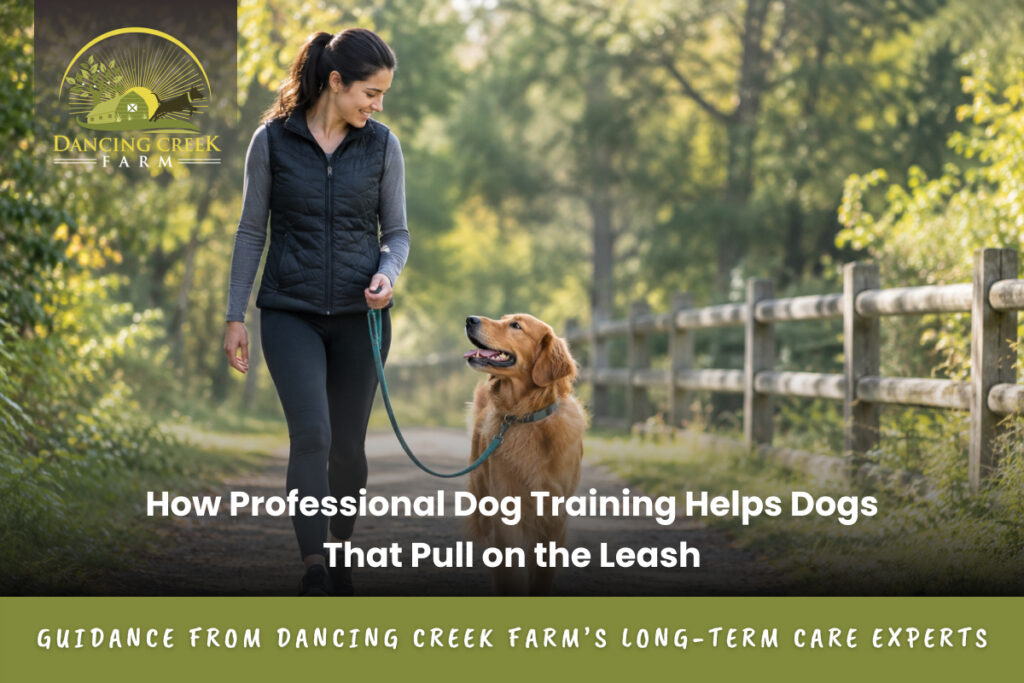
Walking your dog should be one of the simplest ways to spend time together. But when your dog constantly pulls, lunges ahead, or tries to control the direction of every walk, something that should be enjoyable can quickly become frustrating.

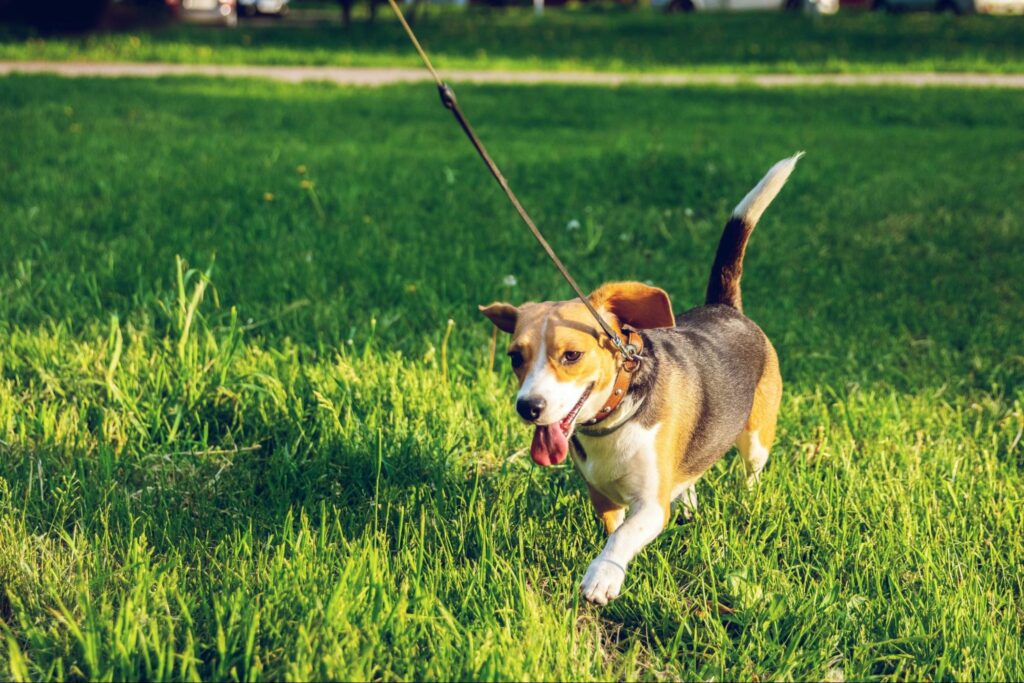
Leash pulling is one of the most common problems dog owners experience. Some dogs pull because they are excited. Others want to reach another dog, chase a smell, investigate their surroundings, or simply move faster than their handler. Some dogs have never learned that walking calmly beside a person is an expected behavior.

The good news is that leash pulling is a trainable behavior.

A professional dog training service in VA can help identify why a dog is pulling and create a structured training plan that teaches the dog how to walk with better focus, communication, and control.

At Dancing Creek Farm, leash skills are part of the practical obedience work we provide. Our training programs include loose-leash work, basic obedience, impulse control, confidence building, and real-world exposure. The goal is not simply to make a dog walk beside someone for a few minutes. The goal is to help the dog understand how to respond to their handler in everyday situations.

Why Do Dogs Pull on the Leash?

Before trying to stop leash pulling, it helps to understand why it happens.

Dogs do not usually pull because they are trying to make their owners frustrated. Pulling is often a learned behavior that has become rewarding over time.

For example, imagine a dog sees another dog across the street. The dog pulls toward the other dog, and the owner eventually moves forward. From the dog’s perspective, pulling worked.

The same thing can happen with:

  • Interesting smells
  • Squirrels or wildlife
  • Other dogs
  • People
  • New environments
  • Open spaces
  • Favorite walking locations
  • Exciting sounds
  • Food or other distractions

Over time, the dog can learn that pulling is the fastest way to reach something interesting.

This is why simply holding the leash tighter does not always solve the problem. The dog needs to learn an alternative behavior.

What Is Loose Leash Walking?

Loose leash walking means the leash remains reasonably relaxed instead of constantly being pulled tight.

It does not necessarily mean your dog must stay perfectly beside your leg every second of the walk.

A dog can sniff, explore, and enjoy the environment while still learning to respond when the handler changes direction, slows down, stops, or gives a cue.

Good loose leash walking gives the dog more freedom while also creating better communication between the dog and the person holding the leash.

This is an important distinction because successful leash training is not about preventing a dog from exploring. It is about teaching the dog when exploration is appropriate and when they need to pay attention to their handler.

Why Leash Pulling Can Become a Bigger Problem

A dog that pulls occasionally may not seem like a serious concern.

But consistent pulling can create several challenges.

It Can Make Walks Physically Difficult

A strong dog pulling forward can put considerable pressure on the person’s arms, shoulders, and back.

For older adults, children, or people with limited strength, controlling a powerful dog can become especially difficult.

It Can Reinforce Excitement

Every time a dog pulls toward something exciting, the behavior can become stronger.

The dog learns that intense excitement followed by pulling eventually gets them closer to what they want.

It Can Affect Safety

A dog that suddenly pulls toward a road, another animal, or an unfamiliar person can create a dangerous situation.

Reliable leash skills give owners more control when unexpected distractions appear.

It Can Make Walks Less Enjoyable

When every walk becomes a struggle, owners may start taking fewer walks.

That can reduce opportunities for physical exercise, mental stimulation, and quality time between dogs and their families.

How Professional Dog Training Helps With Leash Pulling

A professional trainer can look beyond the pulling itself.

Instead of asking only, “How do I stop my dog from pulling?” a trainer can ask:

  • What causes the pulling?
  • How intense is the behavior?
  • Does the dog pull everywhere or only in certain places?
  • Does the dog become excited around other dogs?
  • Does the dog understand basic obedience?
  • Can the dog focus on the handler around distractions?
  • Is fear contributing to the behavior?
  • Does the owner know how to respond consistently?

This broader assessment helps create a training program suited to the individual dog.

A professional dog training service in VA can then work on the foundation skills that make better leash behavior possible.

1. Building Attention and Engagement

A dog cannot consistently follow leash guidance if they are completely focused on everything except their handler.

Training often begins with engagement.

The dog learns that paying attention to the person walking them is valuable.

This may involve simple exercises such as responding to their name, making eye contact, following a handler’s movement, or changing direction when asked.

The goal is to establish communication before adding major distractions.

2. Teaching Better Impulse Control

Impulse control is an important part of leash training.

A dog may know how to sit in a quiet room but still struggle to control themselves when they see a squirrel or another dog.

Training can teach the dog to pause before rushing toward something exciting.

This same skill can help with:

  • Doorway manners
  • Greeting people
  • Waiting for food
  • Getting in and out of vehicles
  • Walking past distractions
  • Settling in public places

Better impulse control can make leash behavior much more reliable.

3. Improving Leash Manners Through Consistency

Dogs learn from patterns.

If pulling sometimes gets them where they want to go and sometimes does not, the behavior can remain difficult to change.

Consistent handling helps the dog understand what is expected.

Professional training gives owners an opportunity to learn how to respond calmly and consistently rather than reacting differently every time the dog pulls.

This is one reason owner education matters just as much as training the dog.

4. Practicing Around Real-World Distractions

A dog may walk beautifully in a quiet training area and immediately start pulling once they see another dog.

That does not mean the training failed.

It means the dog has not yet learned to generalize the behavior.

Real-world practice helps dogs understand that leash skills apply in different environments.

Depending on the dog’s needs, training may eventually include:

  • Quiet outdoor areas
  • Walking paths
  • Parks
  • Public spaces
  • New environments
  • Other dogs at a safe distance
  • Everyday household situations

At Dancing Creek Farm, real-world exposure is part of the training philosophy. The goal is to help dogs use their skills beyond a controlled training environment.

5. Teaching the Dog How to Respond to Direction

A dog that constantly chooses the direction of the walk can become difficult to manage.

Professional training can help establish clearer communication around changes in direction, stopping, starting, and pace.

The dog learns that the person holding the leash is part of the walking experience and that paying attention to that person leads to predictable outcomes.

This does not require turning every walk into a formal obedience session.

Instead, small moments of communication can be incorporated into normal walks.

The Role of Balanced Dog Training

Different dogs respond differently to training.

At Dancing Creek Farm, balanced dog training is based on communication, structure, positive reinforcement, and appropriate guidance. The approach is individualized rather than assuming every dog needs exactly the same training plan.

For leash pulling, this can mean rewarding appropriate walking behavior while providing clear guidance when the dog becomes distracted or starts pulling.

The important part is that the dog understands what is expected.

Training should not be about frightening a dog into compliance. It should help the dog learn how to make better choices and understand the communication coming from the handler.

Owners should also understand the tools being used and how to use them correctly. Professional instruction is especially important when training equipment is involved.

Why Some Dogs Need More Than a Few Training Sessions

Not every leash-pulling dog has the same problem.

A young dog that has never learned leash skills may improve relatively quickly with consistent practice.

Another dog may have spent years pulling toward other dogs, people, wildlife, or environmental distractions.

A dog that also lunges, becomes highly aroused, or shows fear on walks may need a more comprehensive training plan.

That is where professional assessment becomes particularly valuable.

At Dancing Creek Farm, training options include private training and board-and-train programs. The appropriate option depends on the dog’s behavior, the owner’s goals, and the level of training required.

The goal should always be realistic progress rather than promising an instant transformation.

Private Training for Leash Pulling

Private training can be useful for owners who want to participate directly in their dog’s training.

It gives the trainer an opportunity to observe the dog and handler together.

This matters because sometimes the dog understands the exercise, but the owner is unintentionally giving mixed signals.

Private training can help owners learn:

  • How to hold and manage the leash
  • How to recognize early signs of excitement
  • How to redirect attention
  • How to reinforce calm behavior
  • How to practice around distractions
  • How to maintain consistency at home

Dancing Creek Farm offers private training at the farm and can also use real-world environments as follow-up practice when appropriate.

Board and Train for Dogs That Need More Structure

Some families prefer an immersive training experience.

A board-and-train program allows a dog to spend more time in a structured environment where training can become part of the daily routine.

This can be particularly useful for dogs that need more intensive work on obedience, leash skills, impulse control, or household manners.

However, board and train should not be viewed as a substitute for owner involvement.

When the dog returns home, the family needs to understand the training and continue reinforcing the desired behaviors.

At Dancing Creek Farm, owner communication and follow-up are an important part of the training process.

A Practical Example From Dancing Creek Farm

One example shared by Dancing Creek Farm involved a shepherd named Gracie.

Gracie had been pulling her owner during walks and had also become territorial and leash reactive around other dogs. Her behavior made normal walks stressful because encountering another dog could lead to pulling, barking, or lunging.

After spending time at Dancing Creek Farm, her owner reported a noticeable change in her walking behavior and confidence.

During a later hike, Gracie encountered other people with dogs. According to the owner’s testimonial, she became alert but did not bark, lunge, or pull toward the other dogs.

This example illustrates an important point about leash training: the goal is not simply to make a dog walk nicely when nothing interesting is happening.

The real test is whether the dog can use their training when something exciting or distracting appears.

Every dog will progress differently, and one dog’s experience should not be treated as a guaranteed result for another dog. Training plans should be based on the individual dog’s behavior, temperament, environment, and goals.

How Owners Can Reinforce Leash Training at Home

Professional training creates a foundation, but daily habits matter.

Here are some simple ways owners can support better leash behavior.

Keep Training Sessions Short

You do not need to turn every walk into a long training session.

A few focused minutes can be valuable.

Practice attention, stopping, changing direction, and calm walking before allowing your dog to continue exploring.

Reward the Behavior You Want

Notice when your dog is walking calmly.

Do not wait only for mistakes before interacting with your dog.

Calm walking, checking in with you, and responding to a cue are behaviors worth reinforcing.

Avoid Practicing Only in Easy Environments

Once your dog understands the basics, gradually introduce distractions.

Do not immediately take a dog that struggles around other dogs into the busiest dog park.

Increase difficulty gradually.

Stay Consistent

Everyone in the household should follow the same basic rules.

If one person allows pulling while another person does not, the dog receives conflicting information.

Consistency makes learning easier.

Give Your Dog Appropriate Exercise and Enrichment

Some dogs are easier to train when their physical and mental needs are being met.

Exercise, enrichment, rest, and routine can all influence how a dog handles training.

However, exercise alone does not replace leash training. A physically tired dog can still pull if they have never learned how to walk calmly.

When Should You Get Professional Help for Leash Pulling?

Consider professional help if:

  • Your dog is strong enough to pull you off balance.
  • Your dog repeatedly lunges at people or dogs.
  • Your dog becomes extremely excited outside.
  • You avoid walking because the experience is stressful.
  • Your dog ignores you around distractions.
  • You have tried training consistently without meaningful progress.
  • You are unsure how to use training equipment safely.
  • You are worried that pulling could create a safety problem.

Early guidance can prevent a frustrating habit from becoming even more established.

If leash pulling is accompanied by aggression, severe fear, or other serious behavioral concerns, an experienced professional should assess the situation and determine what type of support is appropriate.

Why Leash Training Is About More Than Walking

Good leash behavior can change everyday life.

A dog that can walk calmly is easier to take:

  • Around the neighborhood
  • On hikes
  • To pet-friendly businesses
  • On family outings
  • To training classes
  • On vacations
  • Around visitors and other dogs

More importantly, leash training can improve communication between the dog and owner.

Instead of constantly fighting against the leash, the owner can begin to trust the dog to respond to direction.

That creates a calmer experience for both ends of the leash.

What to Look for in a Professional Dog Training Program

When choosing a trainer, look beyond promises of quick results.

Ask questions such as:

  • How do you evaluate my dog’s behavior?
  • What training methods do you use?
  • How will you address leash pulling?
  • Will my dog practice around distractions?
  • How will I learn to maintain the training?
  • What happens after the program ends?
  • Can I see how the training works?
  • Is the program appropriate for my dog’s specific behavior?

A quality program should be willing to explain its approach clearly.

At Dancing Creek Farm, training is designed around communication, structure, confidence, and real-world skills. Families receive regular updates during training, and the team provides continued communication so owners can better understand how to maintain the work after their dog returns home.

Final Thoughts

Leash pulling is frustrating, but it does not have to define every walk you take with your dog.

The key is to understand why the behavior is happening and teach your dog what you want them to do instead.

A professional dog training service in VA can provide the assessment, structure, consistency, and practical guidance needed to make that process easier. Whether your dog needs private coaching, a training tune-up, or a more immersive board-and-train program, the right approach should be based on your dog’s individual needs.

At Dancing Creek Farm, leash training is part of a broader approach to helping dogs become calmer, more responsive, and better prepared for everyday life.

With consistent training and owner involvement, walks can become less of a struggle and more of what they were meant to be: time spent enjoying life together.

Frequently Asked Questions

1. Can professional dog training stop a dog from pulling on the leash?

Professional training can help reduce leash pulling by teaching dogs better focus, impulse control, and leash manners. Results vary depending on the dog’s age, history, temperament, motivation, and consistency at home.

2. How long does it take to teach a dog loose leash walking?

There is no single timeline for every dog. Some dogs improve quickly, while others need weeks or longer of consistent practice. Dogs with strong pulling habits or leash reactivity may require more structured training.

3. Is leash pulling a sign that my dog needs professional training?

Not necessarily, but professional help can be valuable if pulling is strong, persistent, difficult to manage, or accompanied by lunging, fear, or reactivity. A trainer can identify the cause and create a suitable training plan.

4. Can an older dog learn better leash manners?

Yes. Older dogs can learn new behaviors. The training process may need to account for established habits, physical limitations, motivation, and previous experiences, but age alone does not prevent a dog from learning.

5. Does board and train help with leash pulling?

A board-and-train program can provide structured, repeated practice and professional guidance for leash skills. However, owners still need to learn how to maintain the training after the dog returns home. Long-term success depends on consistent reinforcement in everyday life.