What you need to know:
|
How to stop a dog from pulling on leash comes down to one rule: pulling should never work. If your dog pulling on leash drags you toward every tree, it’s because that drag has paid off hundreds of times.
| Short answer
Stop walking the instant the leash tightens, start again the instant it loosens, and reward your dog when they’re at your side. Add a front-clip no pull harness for control while you train, and keep sessions short. Most dogs improve noticeably within a few weeks of daily practice. |
I’d start every pulling dog with the stop-and-go method before buying any new gear. Here’s the plan I’d follow.
Why does my dog pull on walks?
Your dog pulls on walks because the world moves faster for them than it does for you. Dogs naturally walk quicker than people, and every smell, squirrel, and passing dog is a reason to hurry.
Three things usually keep the habit going:
- Pulling gets rewarded. Each time the dog leans in and you follow, the dog learns that tension equals progress.
- The opposition reflex. Dogs tend to push against pressure. Think of someone leaning on your shoulder: you lean back without deciding to. Tug the leash backward, and many dogs pull harder forward.
- Excitement and frustration. The walk is often the best part of the day, and being tethered to a slow human is frustrating.
Picture a slot machine that pays out about half the time. That’s what an inconsistent walk feels like to a dog. Pull sometimes works, so the dog keeps trying.
Pain can play a role too, and Dogs Trust’s guidance on lead pulling lists pain and illness among the causes, so a vet check is worth it for a dog that suddenly starts pulling or stopping.
If the pulling comes with barking and lunging at other dogs, read my notes on fear reactivity in dogs, because that’s a different problem.
What is loose leash walking, and how is it different from the heel command?
| Direct answer
Loose leash walking means your dog can move around freely as long as the leash keeps a gentle J-shaped droop. The heel command is a formal position, with the dog’s shoulder at your leg, used for obedience or tight spaces. |
Loose leash walking is strolling down the sidewalk with a friend. Heel is marching in formation.
The American Kennel Club, in guidance updated April 2026, makes the same split: everyday leash walking doesn’t require a formal heel.
I teach loose leash walking first for nearly every family dog, then add heel as a cue for crowded spots. I cover the formal version in the seven basic commands every dog should know.
How to stop a dog from pulling on leash: my step-by-step method
Leash training a dog works best as a short, repeatable routine rather than a battle on every walk. This is the loose leash training plan I’d hand any owner.
- Pick a boring place. Start in a driveway, yard, or empty parking lot. Distractions come later.
- Charge up a marker. Say “yes” and immediately give a soft, smelly treat. Repeat ten times so “yes” means food is coming.
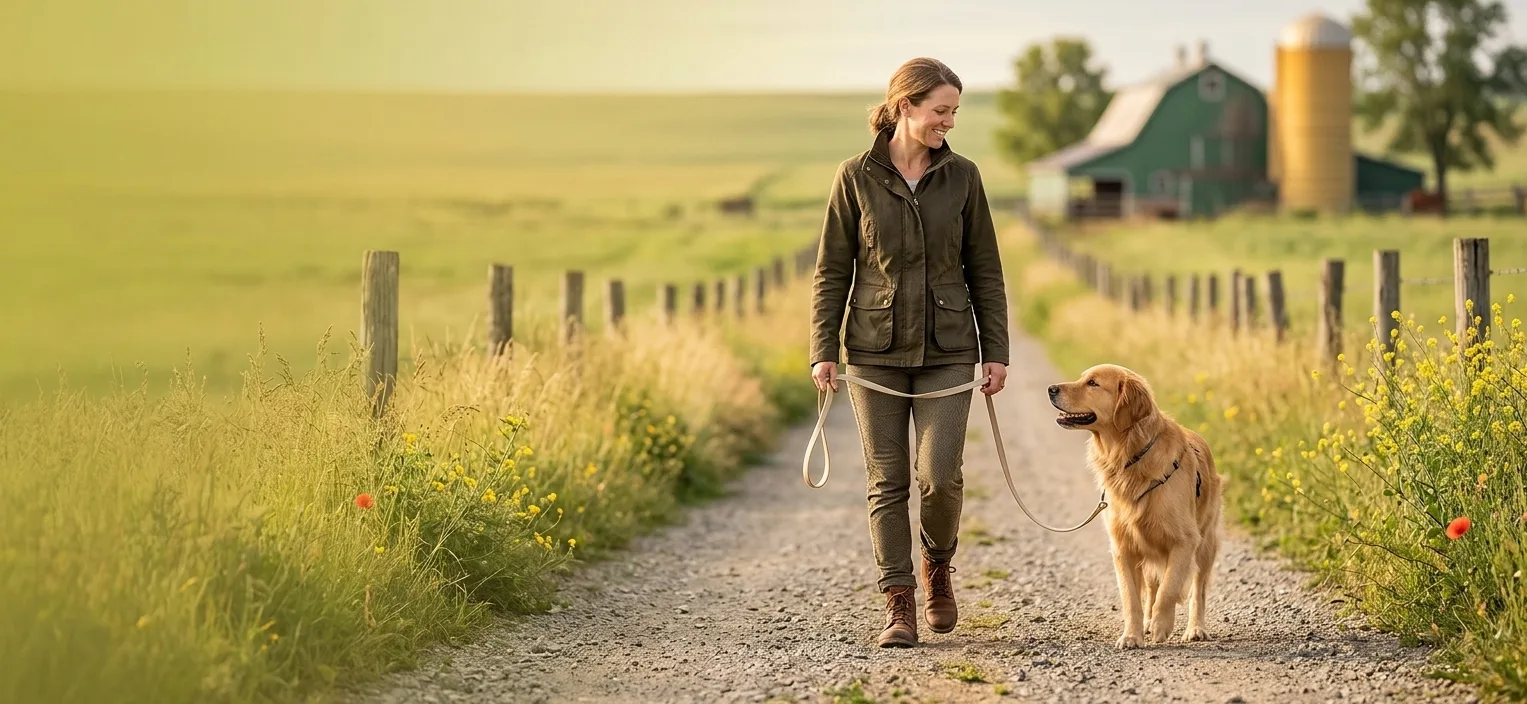
- Be a tree. Walk forward. The moment the leash goes tight, stop and stand still. Don’t yank back, since that triggers the opposition reflex.
- Wait for slack. When your dog turns or steps back and the leash loosens, say “yes,” treat at your leg, and walk on.
- Turn away from the pull. If your dog keeps straining, calmly turn and walk the other direction. Reward when they catch up at your side.
- Add distance and distractions slowly. Move to the sidewalk, then the park, only when your dog succeeds most of the time at the current level.
The San Francisco SPCA calls this approach “red light, green light” and suggests about ten minutes, two or three times a day. In my experience, that schedule beats one long walk where you’re stopping every three steps and losing your patience.
Where you deliver the treat matters more than people think. Hand it over right next to your leg, at your dog’s nose height. Your dog learns that the reward lives beside you, not out in front.
Everyone who walks your dog has to follow the same deal. If one person lets the dog drag them to the mailbox, the slot machine starts paying out again, and your leash manners progress stalls.
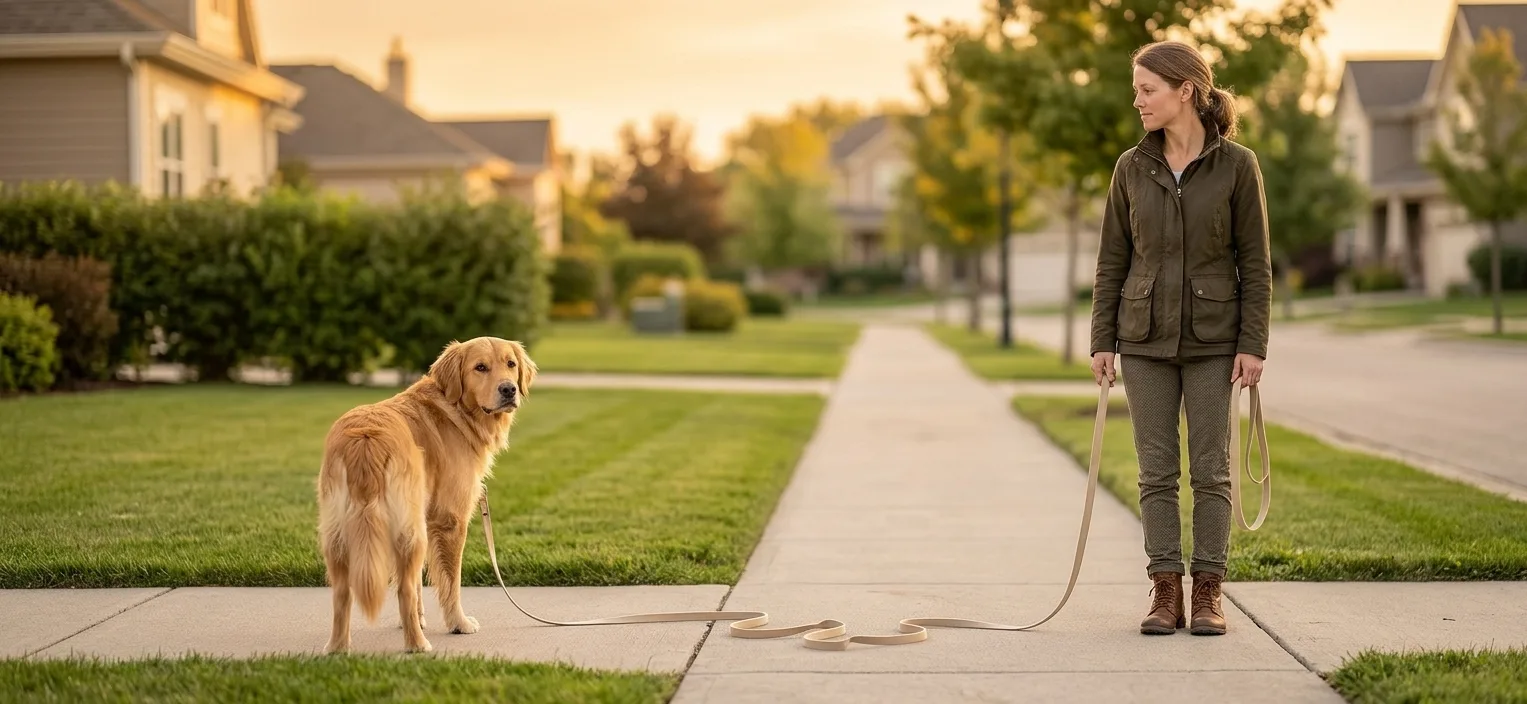
At Dancing Creek Farm, a 2-year-old Labrador came to our board-and-train program pulling hard on the leash and getting overly excited on walks. After training, the walks became calmer and more enjoyable, with better leash manners, less pulling, and more focus on the handler.
Do no pull harnesses actually work?
Yes, a no pull harness reduces pulling, but it manages the behavior rather than teaching it. Use one as a training aid while the method above does the teaching.
A front-clip no pull harness attaches the leash at the chest. When the dog surges forward, the pressure turns their body sideways toward you. It’s the difference between steering a wagon by the handle at the front and pushing it from behind.
The strongest evidence I’ve found is a 2025 review in the journal Animals by Cavalli and Protopopova, summarized by Faunalytics in November 2025. It found that all harnesses changed dogs’ gait somewhat, and that fit matters most.
For dogs that pull, it recommended reward-based training paired with non-tightening front-clip harnesses.
| Equipment | Best for | Watch out for |
| Flat collar | Dogs that already walk on a loose leash | Neck pressure on pullers; not for flat-faced breeds |
| Back-clip harness | Small or flat-faced dogs, non-pullers | Can make it easier to lean in and pull |
| Front-clip no pull harness | Most dogs that pull while you train | Fit matters; check for rubbing behind the front legs |
| Head halter | Strong pullers who need extra steering | Needs slow introduction; many dogs paw at it at first |
| Retractable leash | Open-field sniff time only | Rewards pulling with more line |
The same review linked collars to higher eye pressure when dogs pulled, which is one more reason I’d move a hard puller into a harness.
One honest caveat. Dancing Creek Farm practices balanced dog training, and the farm’s trainers sometimes use slip leads or prong collars with specific dogs. I’d never hand one to an owner without hands-on coaching, because the tool only works when the timing and fit are right.
What is the best leash for a dog that pulls?
The best leash for a dog that pulls is a plain, fixed-length 6-foot leash in nylon, biothane, or leather, with a padded handle you can grip comfortably. Boring wins here.
What I’d look for:
- Fixed length. The American Kennel Club recommends a 6-foot leash and advises against retractables for training.
- Comfortable handle. A padded handle protects your hands on a strong surge.
- Double-ended clip (optional). Clip one end to the front ring and one to the back ring of a dual-clip harness for two points of control.
- No bungee sections at first. Dogs Trust advises against bungee and flexi leads because the give blurs the “tight means stop” message.
For dogs who have learned the basics, a longer 8 to 10 foot line on sniff walks gives them freedom without rewarding a hard pull.
How should you handle walking a strong dog safely?
Walking a strong dog safely starts with your own body position. Hold the leash with both hands near your waist, keep your knees soft, and never wrap the leash around your fingers or wrist.
This isn’t a small risk. A Johns Hopkins study, reported by ScienceDaily in April 2023, estimated 422,659 US adults went to emergency rooms for leash-dependent dog walking injuries between 2001 and 2020.
Finger fractures, brain injuries, and shoulder sprains topped the list, and adults 65 and older faced the greatest risk.
A few dog walking tips that help with big pullers:
- Burn energy first. Five minutes of fetch or tug before the walk takes the edge off.
- Walk at quiet times. Early morning and late evening mean fewer triggers.
- Plan out-and-back routes. Many dogs pull less on the return leg.
- Turn early. Change direction before your dog locks onto a squirrel, not after.
When should you get professional help for a dog pulling on leash?
Get help when walks feel unsafe, when your dog lunges or reacts at triggers, or when a month of daily practice hasn’t moved the needle. Strong adult dogs and anxious dogs often need a trainer’s eyes on the details.
There’s a fuller breakdown in how professional dog training helps dogs that pull on the leash.
| Want a structured reset? The Dancing Creek Farm board and train programs include loose leash heel work, and you can read what to expect from a board and train program before you decide. |
Frequently asked questions
How long does it take to train a dog not to pull on the leash?
Most dogs show clear improvement within two to four weeks of short daily sessions, though a long pulling history can take longer. Consistency matters more than breed: a dog that sometimes gets to pull will take far longer. Expect progress in quiet places first, and slower progress around other dogs and wildlife.
Is it too late to leash train an older dog?
No, older dogs learn loose leash walking well and often bring calmer energy than puppies. The real hurdle is habit strength, since an older dog may have practiced pulling for years. Start somewhere quiet, use high-value treats, and keep sessions short. Ask your vet first if joint pain might be changing how your dog walks.
Should I use a collar or a harness for a dog that pulls?
For a dog that pulls, a well-fitted front-clip harness is usually the safer choice. A 2025 review of walking equipment recommended non-tightening front-clip harnesses plus reward-based training for pullers, and linked collar pulling to higher eye pressure. Save the flat collar for ID tags and dogs that already walk nicely.
Can I use a no pull harness forever?
You can, and many owners do, especially with large dogs. Just know that the harness controls pulling rather than curing it. Many dogs pull again in regular gear if the training never happened. Use the harness while you teach loose leash walking, check the fit monthly for rubbing, and keep rewarding your dog for staying near your side.
The bottom line
How to stop a dog from pulling on leash isn’t a mystery, it’s a matter of consistency. Make tension mean stop and slack mean go, pay your dog at your side, and choose gear that helps you train instead of replacing training.
Your cheat sheet:
|
If you’d like hands-on help, you can check availability at Dancing Creek Farm.

