
What You Need To Know
- Dogs jump because it works. Every touch, shout, or shove counts as attention.
- Remove the payoff for jumping and pay generously for four paws on the floor.
- Teach a sit for greeting, then rehearse it at the door with friends.
- Feed treats at floor level. Treats held at chest height teach dogs to reach up.
- Expect jumping to spike for a few days before it fades. That spike means it’s working.
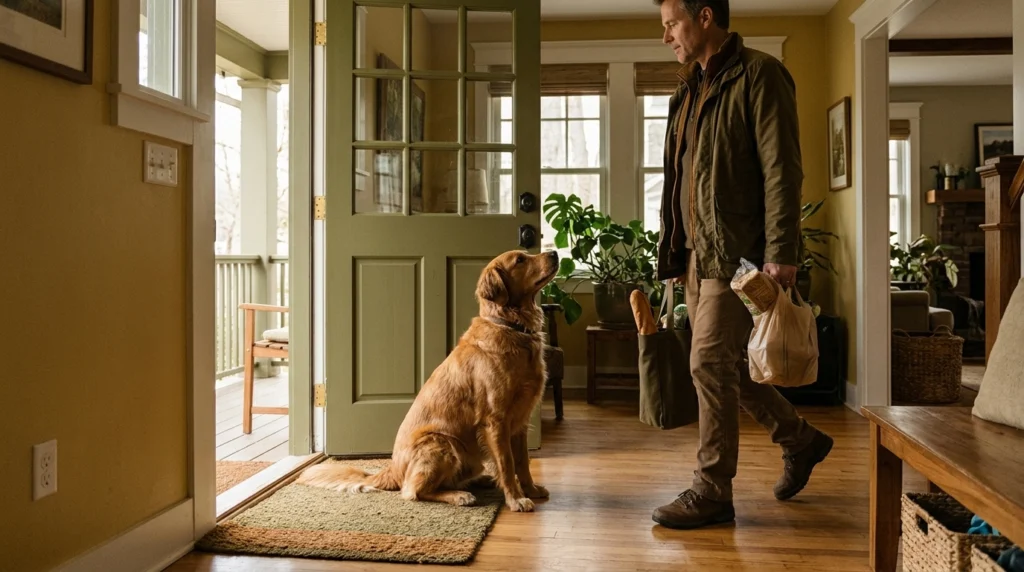
You walk in with groceries, and 70 pounds of happy dog hits you at the hip. A dog jumping on people is one of the most fixable manners problems we see at the farm.
The short answer: to stop a dog from jumping, make jumping pointless and make calm greetings pay. Turn away the instant paws leave the floor, reward the moment all four land, and practice a sit for greeting until it’s your dog’s default hello.
Why do dogs jump on people?
Dogs jump on people mostly to say hello. According to VCA Animal Hospitals, dogs greet face to face, and jumping is how a short animal reaches a tall one’s face.
Then we reward it by accident. Like a slot machine, the occasional jackpot (a laugh, a pat, even a push) keeps the dog pulling. VCA notes that rewarding jumping only sometimes can make it stronger.
Other triggers:
- Dog excitement: overstimulated dogs bounce when the energy has nowhere to go.
- Attention seeking: a bored dog learns jumping gets a fast reaction.
- Anxiety: some unsure dogs jump to ease a tense meeting, per VCA.
If jumping comes with stiff posture, growling, or nipping, it’s not a manners issue. Read our notes on fear and reactivity in dogs and talk to a professional.
How do you stop a dog from jumping, step by step?
Dog jumping up training works best as a short daily routine. This is the plan we’d start with:
- Manage first. Use a leash, baby gate, or crate when guests arrive so your dog can’t practice jumping.
- Teach sit somewhere quiet. Our guide to basic commands like sit and place walks through it.
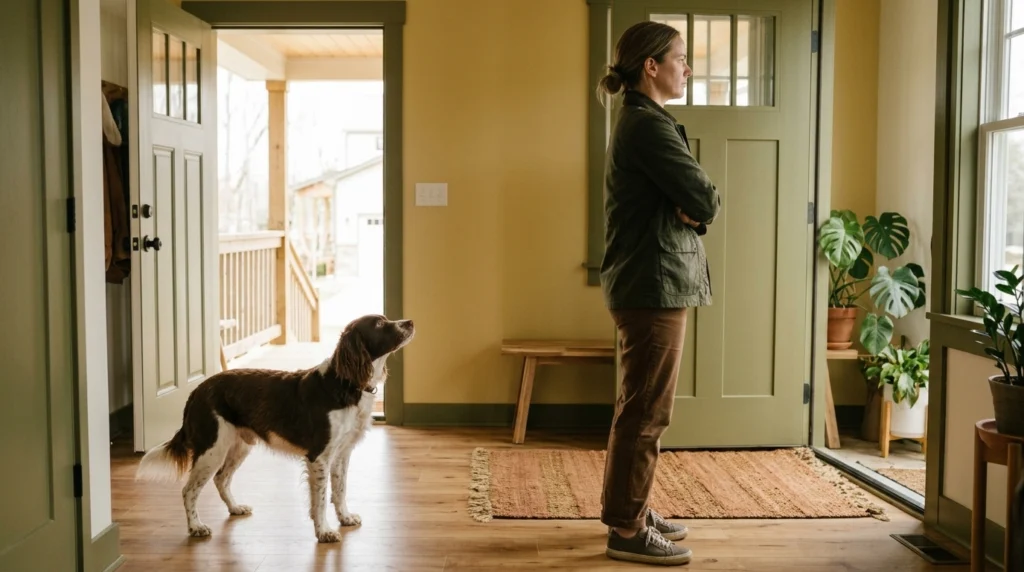
- Ignore jumping completely. Turn sideways, fold your arms, go silent. No eye contact, no pushing.
- Reward four on the floor. The second all four paws land, say “yes” and drop a treat at your feet.
- Rehearse the door. Step out, come back in, ask for the sit. Repeat until it happens on its own.
Why does it work to ignore jumping? A behavior that never pays eventually stops. The American Kennel Club notes that even pushing can count as attention.
Where should the treat go?
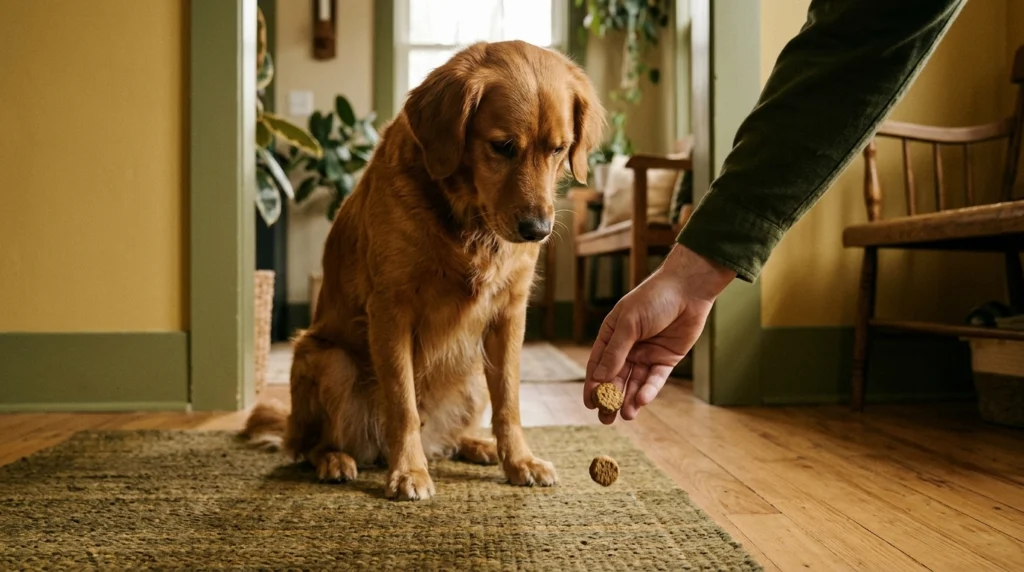
Feed low, always. Treats delivered near your chest teach dogs to jump for them, a point Battersea makes clearly.
A dog sniffing the ground can’t jump at the same time, which is why Dogs Trust suggests scattering treats when visitors arrive.
How do you stop puppy jumping on guests?
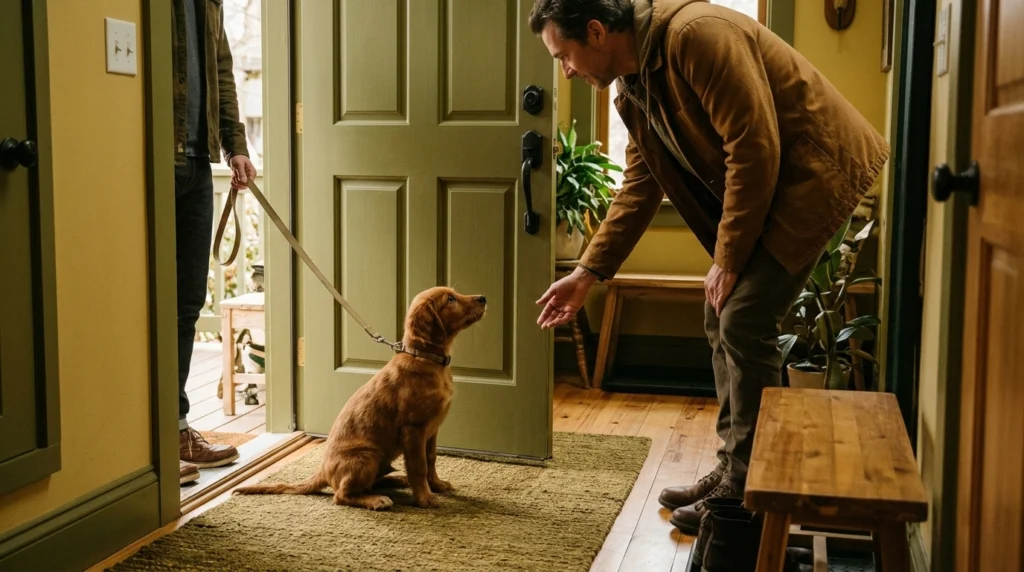
To stop puppy jumping on guests, stage practice greetings with a patient friend first.
- Stand on the leash, leaving enough slack to sit but not to jump.
- Your friend approaches only while your puppy sits, and walks away if paws come up.
- Run 5 to 10 approaches, then quit while your puppy is still winning.
PetMD suggests a leash for the first 15 minutes with new guests. We like that rule, since most dog excitement burns off early.
Which greeting situations cause the most trouble?
Dog greeting manners break down in predictable places:
| Situation | Do this | Avoid this |
|---|---|---|
| You coming home | Greet calmly, reward four paws down | Excited baby talk at the door |
| Guests arriving | Leash or gate, then sit for greeting | Petting a bouncing dog |
| Strangers on walks | Step aside, feed low | Letting people approach before a sit |
| Kids and older adults | Full management until manners are solid | Any off-leash greeting |
Walks add pulling to the mix, so pair this with our loose-leash walking guide.
Why does jumping get worse before it gets better?
Trainers call it an extinction burst: a short spike in a behavior right before it fades. It’s like jabbing an elevator button five times when it won’t light up.
Battersea notes jumping may briefly increase before it improves. Hold the line, because giving in during an extinction burst teaches your dog that harder jumping wins.
Our honest caveat: ignoring alone doesn’t suit every big, persistent jumper. Lean harder on the leash and gate so nobody gets hurt meanwhile.
What if the family isn’t on board?
One relative who loves a big hug undoes a week of practice. Agree on one rule: no attention until four paws are down. Good dog manners belong to the whole household.
Still getting pounced on? Our private training sessions at the farm cover jumping one on one.
Frequently asked questions
Should you ignore a dog that jumps on you?
Yes, in most cases. Turn sideways and stay silent until all four paws touch the floor, then reward right away. Ignoring removes the attention that keeps jumping alive. Timing is the catch: reward the calm moment fast, or your dog never learns the alternative.
How long does it take to stop a dog from jumping?
Many dogs improve within a few weeks of short daily sessions, though it varies with age, size, and how long the habit has been rewarded. Puppies usually learn faster. Expect a temporary spike early on, because that means the old payoff is disappearing.
Is it bad to knee a dog that jumps?
Yes. PetMD advises against kneeing, stepping on toes, or hitting, since these can injure your dog and may even feel like rough play. Withdrawing attention and rewarding four paws down gets faster, safer results.
How do you teach a dog to greet politely?
To teach a dog to greet politely, pick one greeting behavior, usually a sit, and reward it every time someone approaches. Start with friends at a distance, then add a knock, the doorbell, and finally real visitors. Once it’s reliable, swap some treats for praise.
The bottom line
Jumping is a greeting, not defiance. Pay nothing for paws up, pay plenty for paws down, and practice the sit for greeting until it’s automatic.
Working on broader dog obedience? See what a board and train program looks like, or reach out to our team.

