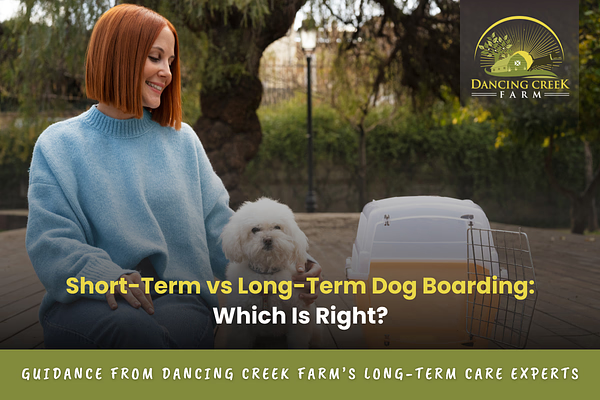
Choosing the right boarding option for your dog is an important decision for any pet owner. Whether you are planning a quick weekend trip or preparing for an extended time away, finding the best care solution matters for your dog’s comfort, safety, and emotional well-being. Understanding the difference between short-term dog boarding and long-term dog boarding can help you make the right choice based on your dog’s personality, health needs, and your travel plans.
Many pet owners assume all boarding services are the same, but there are major differences between a short stay and an extended dog stay. From daily routines and supervision to emotional adjustment and health monitoring, each option serves a different purpose.
In this guide, we will compare short-term and long-term dog boarding, explain the unique boarding benefits of each, and help you decide which is the best fit for your dog.
What Is Short Term Dog Boarding?
Short-term dog boarding usually refers to stays lasting from one night up to around one or two weeks. This option is commonly chosen for weekend getaways, business trips, family emergencies, or short vacations.
Dogs staying for a short period are given temporary care in a safe, supervised environment where their feeding, exercise, and comfort needs are managed while their owners are away.
Common Reasons for Short-Term Boarding
- Weekend vacations
- Business travel
- Home renovations
- Family events
- Emergency travel situations
- Short hospital stays
This type of boarding helps dogs remain safe and cared for without disrupting their lives too heavily.
What is long-term dog boarding?
Long-term dog boarding is designed for dogs that need care for several weeks or even months. This may happen when owners are relocating, serving in the military, traveling internationally, handling medical recovery, or facing major life transitions.
Because an extended dog stay involves more time away from home, facilities offering long-term boarding often focus heavily on consistency, emotional support, and routine-building.
Common Reasons for Long-Term Boarding
- Military deployment
- Long work assignments
- International travel
- Home relocation
- Medical recovery
- Temporary housing issues
- Extended family emergencies
Long-term care requires more planning and a boarding environment that feels stable and supportive rather than temporary.
Key Differences Between Short-Term and Long-Term Dog Boarding
Understanding the core differences helps you choose wisely.
1. Length of Stay
This is the most obvious difference.
Short-Term Boarding
Usually lasts:
- 1 night
- Weekend stays
- Up to 7–14 days
Long-Term Boarding
Usually lasts:
- Several weeks
- One month or more
- Multiple months for special situations
The longer the stay, the more important routine and emotional adjustment become.
2. Emotional Adjustment
Dogs often need time to settle into a new environment.
Short-Term Boarding
For shorter visits, dogs may experience brief separation stress, but usually return home before full adjustment is needed.
This is ideal for:
- Social dogs
- Confident dogs
- Dogs familiar with boarding
Long-Term Boarding
For long-term dog boarding, emotional adaptation becomes much more important.
Dogs need:
- Stable caregivers
- Consistent feeding schedules
- Familiar routines
- Personalized attention
- Trust-building with staff
Facilities experienced in long stays understand how to reduce stress and help dogs feel secure over time.
This is especially important for dogs with separation anxiety. A professional boarding environment with trained handlers can make a major difference in helping anxious dogs settle.
3. Daily Routine and Enrichment
Short-Term Boarding
Focus is usually on:
- Feeding
- Potty breaks
- Basic exercise
- Safe overnight care
Long-Term Boarding
An extended dog stay requires more enrichment, including:
- Structured play sessions
- Individual exercise plans
- Mental stimulation
- Training reinforcement
- Socialization opportunities
- Rest balance
Without proper enrichment, long-term boarding can become stressful or boring. Quality facilities prioritize both physical and mental wellness.
4. Health Monitoring
Short-Term Boarding
Basic monitoring is often enough for healthy dogs staying a few days.
Long-Term Boarding
For longer stays, detailed health oversight becomes essential.
This may include:
- Medication management
- Weight monitoring
- Appetite tracking
- Behavioral observation
- Senior dog support
- Veterinary coordination, if needed
These are major boarding benefits for owners who need peace of mind during extended absences.
5. Cost Structure
Short-Term Boarding
Often priced per night with standard rates.
Long-Term Boarding
May include:
- Weekly pricing
- Monthly packages
- Customized care plans
- Discounts for extended stays
Although long-term care costs more overall, many facilities offer pricing structures that make it more manageable for extended boarding needs.
How to Decide Which Option Is Right
The best choice depends on your dog and your situation.
Ask yourself:
- How long will I be away?
- Does my dog handle separation well?
- Does my dog need medication or special care?
- Is my dog social or anxious?
- Does my dog benefit from routine and structure?
The answer often becomes clear once you consider both practical and emotional needs.
Dogs That Do Best with Short-Term Boarding
Short-term dog boarding is often ideal for:
- Young, social dogs
- Dogs familiar with boarding
- Dogs with low anxiety
- Healthy dogs without special needs
- Owners taking brief trips
These dogs usually adapt quickly and enjoy the temporary change of environment.
Dogs That Benefit Most from Long-Term Boarding
Long-term dog boarding is better for:
- Dogs need stability during the owner’s absence
- Senior dogs requiring routine
- Dogs with training reinforcement needs
- Dogs with mild separation anxiety
- Dogs during family relocation transitions
- Pets from military families
A proper long-term environment creates a second home rather than simply a temporary kennel.
Choosing an Ethical Boarding Facility Matters
Whether you choose short-term or long-term care, selecting the right facility is critical.
Look for:
- Clean and safe boarding spaces
- Experienced, trained staff
- Personalized care plans
- Transparent communication
- Daily routines with enrichment
- Comfortable sleeping arrangements
- Honest health monitoring
- Positive reviews and reputation
Ethical boarding means your dog is treated like family, not just another reservation.
A professional farm-style boarding environment often provides extra comfort because dogs have more room, calmer surroundings, and less stress than traditional kennel setups.
The Connection Between Boarding and Separation Anxiety
Many owners worry that boarding may worsen separation anxiety, but the opposite can be true when done correctly.
Professional facilities help by providing:
- Predictable schedules
- Calm transitions
- Positive reinforcement
- Human interaction
- Controlled socialization
- Confidence-building routines
This is why many owners first learn about boarding through concerns related to separate anxiety and emotional stress. Quality care helps dogs build trust rather than fear.
Why Extended Dog Stay Services Matter
An extended dog stay is not simply “more days” of regular boarding. It requires a completely different level of attention.
Dogs staying longer need:
- Emotional consistency
- Physical wellness support
- Structured stimulation
- Trust with caregivers
- Personalized routines
These long-term boarding benefits improve not only the dog’s experience but also the owner’s peace of mind.
This is especially valuable during life changes when owners are already under stress.
Trusted Dog Boarding in Danville, VA at Dancing Creek Farm
At Dancing Creek Farm located in Danville, VA, we provide professional dog boarding backed by experience, transparency, and a genuine commitment to animal welfare. Our team follows structured care routines, closely monitors each dog’s health and behavior, and tailors every stay based on individual needs, whether it’s short-term dog boarding or a long-term dog boarding arrangement. With a peaceful, farm-style environment, dogs benefit from reduced stress, consistent schedules, and personalized attention that supports both physical and emotional well-being. Pet owners trust DCF because we prioritize safety, clear communication, and ethical boarding practices, ensuring every dog feels secure, comfortable, and truly cared for during their stay in Danville, Virginia.
Final Thoughts
Choosing between short-term dog boarding and long-term dog boarding depends on your dog’s needs, your travel plans, and the quality of the facility you choose.
Short stays work well for quick trips and temporary care, while long stays require deeper attention, routine, and emotional support. The best boarding experience is one that protects your dog’s physical health while also supporting their confidence and comfort.
At trusted facilities like Dancing Creek Farm, boarding is more than supervision, it is personalized care built around your dog’s well-being. Whether you need a weekend solution or a reliable extended dog stay, choosing the right environment makes all the difference.
The goal is simple: your dog should feel safe, happy, and cared for, no matter how long you are away.
FAQs
1. What is the difference between short-term dog boarding and long-term dog boarding?
Short-term dog boarding usually covers stays from one night to about two weeks, while long-term dog boarding is designed for stays of several weeks or even months. Long-term stays focus more on routine, emotional support, and consistent care for dogs during extended absences.
2. How do I know if my dog needs long-term dog boarding?
If you are traveling for several weeks, relocating, serving in the military, or recovering from a long medical procedure, long-term dog boarding may be the best option. It provides stability, supervision, and personalized care during an extended dog stay.
3. Is short-term dog boarding good for dogs with separation anxiety?
Yes, short-term dog boarding can help some dogs with mild separation anxiety if the facility provides calm routines and trained caregivers. However, dogs with stronger anxiety may benefit more from structured long-term dog boarding with consistent handling and trust-building.
4. Are there special boarding benefits for extended dog stays?
Yes, extended dog stay services often include personalized feeding plans, medication management, exercise routines, health monitoring, and emotional support. These boarding benefits help dogs stay comfortable and healthy during longer stays away from home.
5. What should I look for in a dog boarding facility?
Choose a facility with experienced staff, clean and safe spaces, regular exercise, personalized care plans, and transparent communication. Ethical dog boarding facilities also focus on reducing stress and creating a comfortable environment for both short-term and long-term dog boarding.