
What you need to know:
|
These winter dog care tips come from routines we have run every cold season since 2005, boarding and training dogs in Southern Virginia.
Here’s the thing most owners miss: fur is not a free pass.
The American Veterinary Medical Association (AVMA, the national body for veterinarians) tells owners to learn each pet’s cold tolerance and adjust.
How cold is too cold for dogs?
| Direct answer
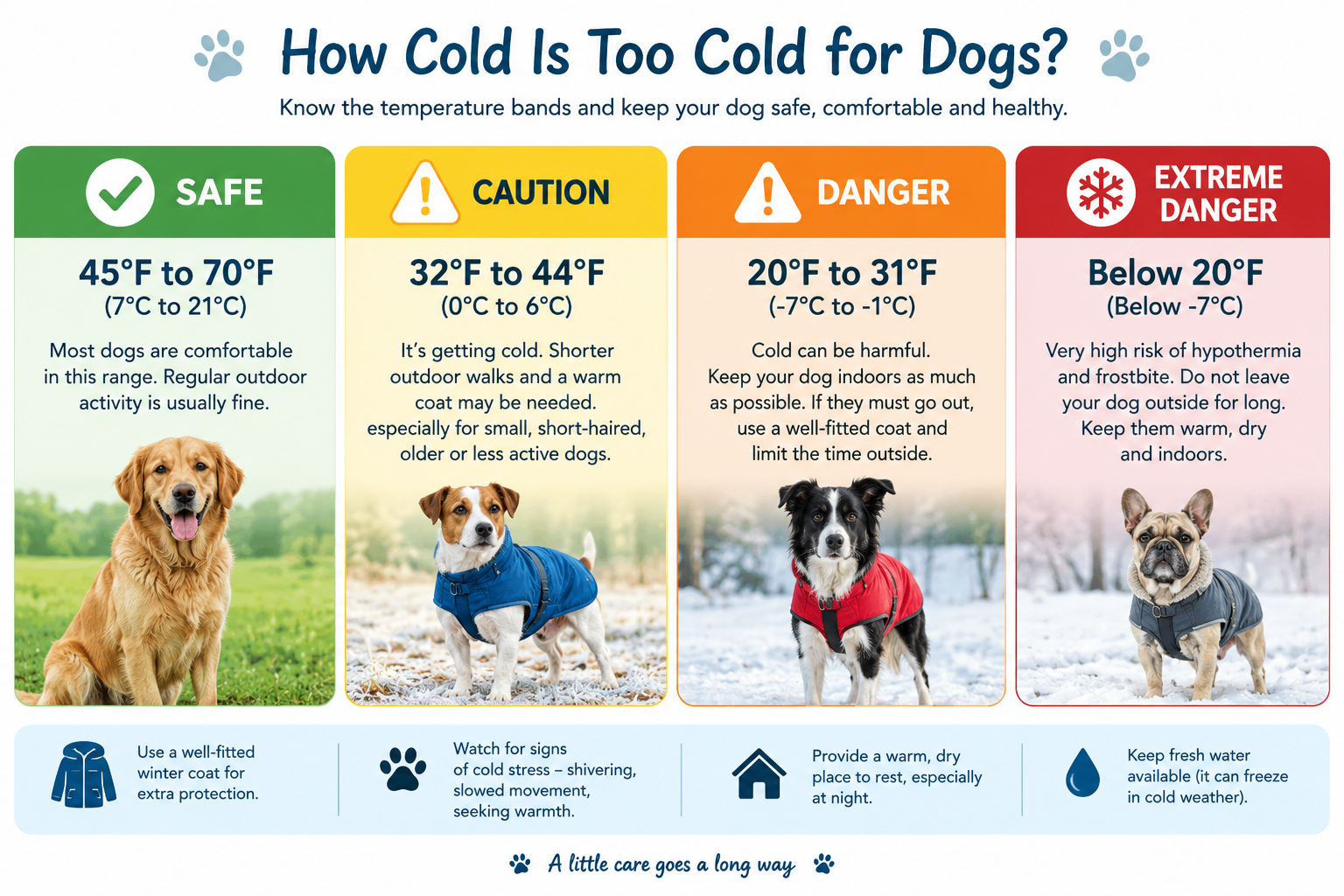
Most healthy dogs handle temperatures down to about 45°F without trouble. From 32°F to 45°F, watch small, thin-coated, young, and senior dogs, and limit their time below freezing. At 20°F or colder, nearly every dog risks hypothermia or frostbite with long exposure. |
Those bands come from veterinary guidance. Marshfield Animal Hospital, as reported by Green Matters, calls 20°F and below the danger zone. Ellevet Sciences uses the same markers in its January 2026 guide.
Treat the thermometer as a starting point, because wind and wet snow pull heat away much faster.
Columbus Humane (February 2026) points owners to the Tufts University safety scale, which adjusts risk for size, coat, moisture, and shelter.
| Temperature | Healthy, thick-coated adults | Small, thin-coated, puppy, or senior dogs |
| Above 45°F | Normal activity | Normal activity, watch for shivering |
| 32 to 45°F | Normal activity | Coat for walks, shorter outings |
| 20 to 32°F | Shorter walks, check paws | Brief walks only, coat required |
| Below 20°F | Potty breaks and short walks | Potty breaks only, then inside |
Our rule of thumb is blunt. If you need gloves outside, your short-haired dog probably needs a coat and a shorter walk.
Which cold weather dog breeds cope best?
Cold weather dog breeds carry dense double coats. Chewy’s veterinary content team lists Siberian Huskies, Alaskan Malamutes, Saint Bernards, American Eskimo Dogs, and Great Pyrenees among the best.
Even they have limits. The AVMA says no pet should spend long periods outside below freezing.
The dogs who struggle most share a few traits:
- Small size: less body mass means faster heat loss.
- Thin coats: Greyhounds, Whippets, and Chihuahuas have little insulation.
- Age: puppies can’t regulate temperature well, and seniors carry less muscle and fat.
- Health conditions: the AVMA notes cold can worsen arthritis.
Do dogs need coats in winter?
Some do, many don’t. The AVMA suggests a sweater or coat if your dog has a short coat or seems bothered by cold.
A dog winter coat works like a windbreaker on a chilly hike. It makes no heat. It holds in the heat your dog already makes.
Pick one that covers the chest and belly and leaves the legs free. The AVMA warns that a wet coat can make a dog colder, so keep a dry spare.
How do you handle dog paw care in winter?
Honestly, we think paws deserve more attention than coats. Dog paw care in winter means keeping ice out, chemicals off, and pads from cracking.
Ice balls form in the fur between toes and press into pads like a pebble in your shoe. Trimming that fur level with the pads helps.
Salt and de-icers are the bigger problem. The AVMA advises wiping feet, legs, and belly after walks to remove snow, salt, and chemicals.
How do you use dog paw balm?
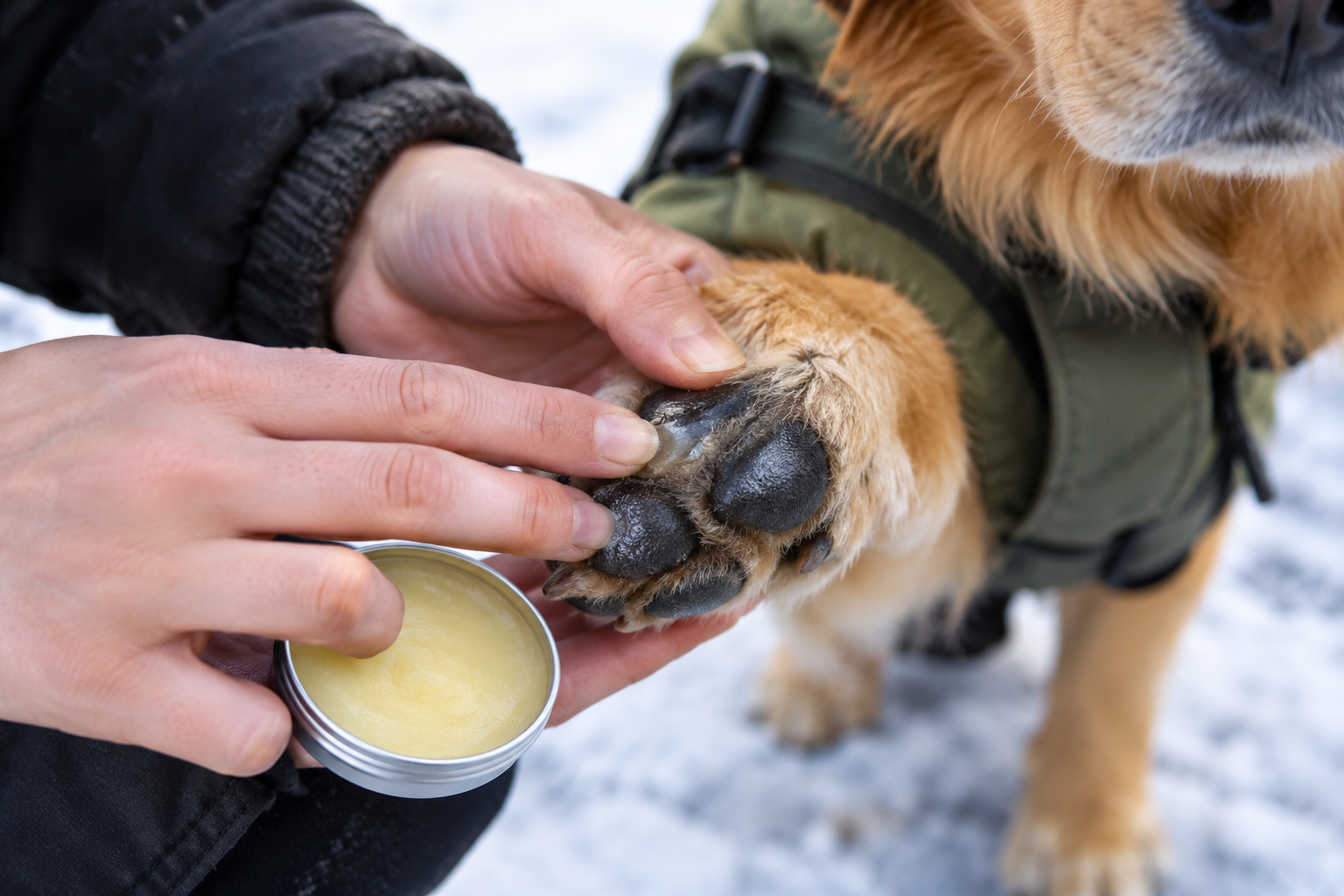
A dog paw balm is a wax or oil based ointment that seals and softens pad skin. Think of it as lip balm for feet.
- Check pads for cracks, redness, or cuts before each walk.
- Rub a thin layer into each pad before heading out.
- Rinse paws with warm water afterward and dry between the toes.
- Apply another thin layer at bedtime.
- Call your vet if a crack bleeds or your dog limps.
Booties are the alternative. The AVMA recommends them but stresses a proper fit.
How do you keep winter dog walks safe?
Winter dog walks should be shorter and better planned, not skipped. Use this dog cold weather safety checklist:
- Shorten the route in very cold weather, as the AVMA advises.
- Stay leashed on snow, since the ASPCA notes dogs can lose their scent and get lost.
- Avoid frozen ponds and streams entirely.
- Check the ID tag, because the ASPCA reports more dogs go missing in winter than any other season.
- Add a light for dark evenings, a habit Battersea recommends.
Icy sidewalks also make a pulling dog a fall risk. Our guide to professional dog training for leash pulling explains how we fix it.
A reliable recall matters more when snow hides scent. Start with these 7 basic dog commands.
What should you know about antifreeze and dogs?
Antifreeze and dogs are a deadly mix. Most automotive antifreeze contains ethylene glycol, a sweet tasting chemical that causes kidney failure.
Pet Poison Helpline says radiator coolant is typically about 95% ethylene glycol. Its antidote works in dogs only within 8 to 12 hours of ingestion.
Early signs look like drunkenness: wobbling, vomiting, and heavy thirst. Prevent exposure this way:
- Store antifreeze sealed and off the floor.
- Wipe up drips under cars right away.
- Choose propylene glycol products, which Pet Poison Helpline calls much safer.
If you suspect exposure, call your vet or Pet Poison Helpline at 855-764-7661 now. Don’t wait for symptoms.
How do you recognize and treat dog frostbite?
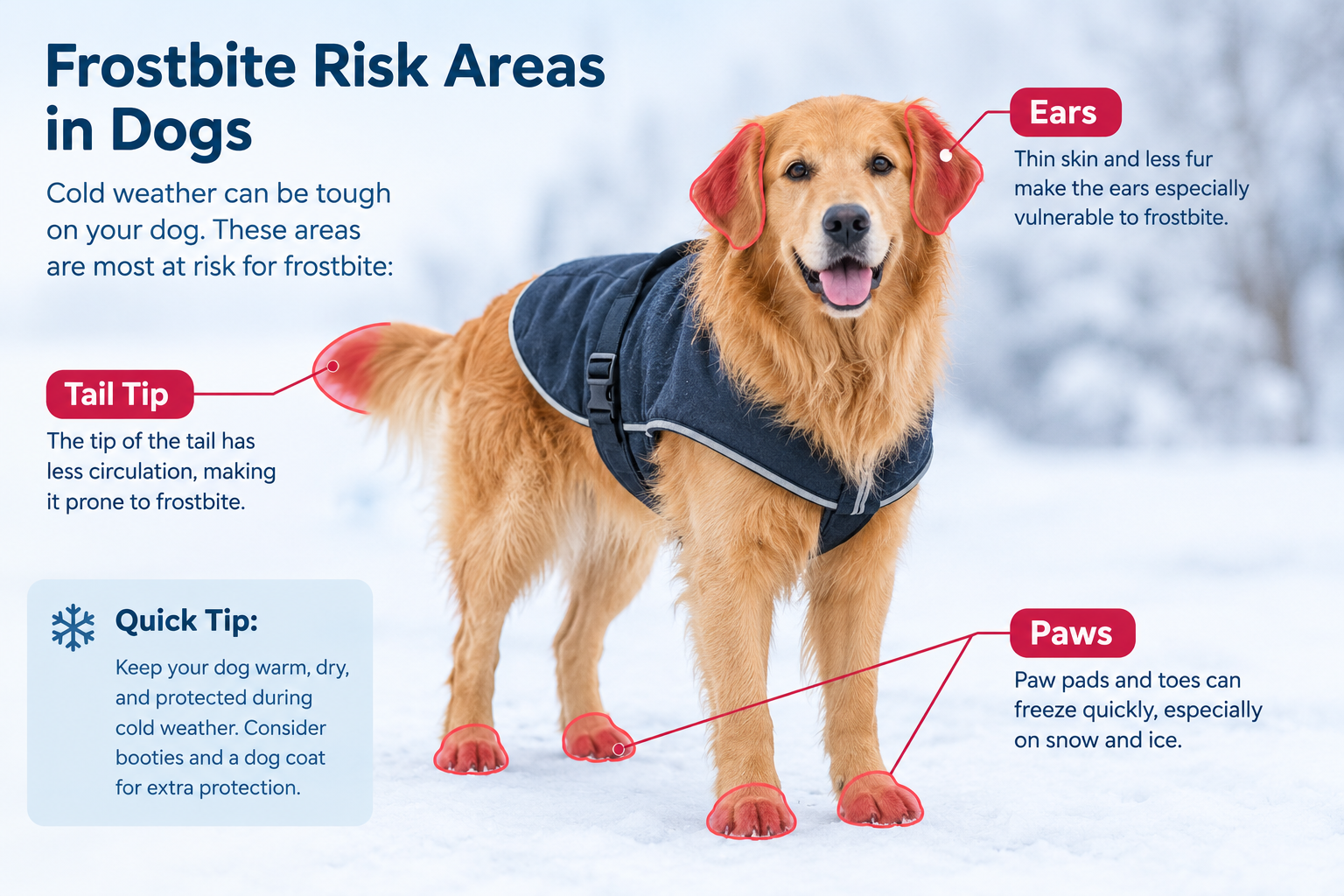
Dog frostbite is cold damage to skin and tissue, usually on the paws, ears, and tail. VCA Animal Hospitals says damp areas are more vulnerable.
Look for pale or bluish skin, coldness, swelling, blisters, or blackened patches. VCA notes signs can take several days to appear.
- Move your dog somewhere warm and dry.
- Wrap them in towels warmed in the dryer.
- Don’t rub the area.
- Skip human pain relievers, which VCA warns can be toxic.
- Get to a veterinarian quickly.
Hypothermia is the whole-body version. Chewy’s vets note shivering can stop as it worsens, so a still dog isn’t necessarily recovering.
These tips are guides, not guarantees. VCA links heart disease and diabetes to higher frostbite risk, so dogs with those conditions need a plan from your own vet.
What does keeping dogs warm outside actually require?
Keeping dogs warm outside takes an insulated, dry shelter, bedding, and unfrozen water. In extreme cold, the AVMA says even outdoor dogs should come inside.
Virginia law sets a floor. Since July 1, 2020, Virginia Code § 3.2-6500 says tethering alone isn’t adequate shelter at 32°F or below.
On our farm, dogs sleep in insulated, climate controlled cabins with elevated beds and fresh blankets. Each cabin opens onto its own fenced yard. Our breakdown of private boarding cabins vs group boarding shows why that layout matters.
On frosty Virginia mornings, dogs may need a little extra care before heading outside. At Dancing Creek Farm, winter routines should reflect each dog’s comfort, coat type, and energy level. Short-haired dogs may benefit from a warm coat and shorter outdoor sessions, followed by time to relax in a comfortable, climate-controlled cabin. It’s the little things that matter, helping every dog stay comfortable, safe, and happy throughout the colder months.
| Traveling this winter? Your dog can stay warm and busy in a climate controlled cabin while you’re away. See our short-term dog boarding in Virginia. |
Frequently asked questions
How long can a dog stay outside in cold weather?
It depends on size, coat, and conditions. Below 20°F, most dogs should get potty breaks and short walks only. Bring your dog in at the first sign of shivering, lifted paws, or slowing down.
Is it safe for dogs to sleep outside in winter?
For most pet dogs, no. The AVMA recommends keeping dogs inside in cold weather. An outdoor dog needs an insulated, windproof shelter off the ground, dry straw bedding, and unfrozen water. In Virginia, tethering alone is not adequate shelter at 32°F or below.
Is road salt bad for dogs’ paws?
Yes. Rock salt dries and irritates pads, and dogs swallow residue when they lick their feet. Rinse paws, legs, and belly after winter walks. On your own steps and driveway, use a pet-safe ice melt, which the AVMA recommends.
Is Vaseline safe for dog paws?
Some owners use it, but a balm made for dogs is the better choice. Dogs lick their paws, so whatever you apply gets swallowed. Ask your vet before putting any human product on cracked or bleeding pads.
Do dogs need more food in winter?
Active outdoor dogs often do. The ASPCA says pets burn extra energy staying warm, so a little more food can help. Less active indoor dogs may need less. Ask your vet before making big changes.
The bottom line on winter dog care
|
Planning holiday travel? Read how we prepare your dog for boarding, or request a reservation and tell us about your dog.
This article shares general care guidance from experienced dog handlers. It is not veterinary advice. Contact your veterinarian about your own dog, especially in an emergency.

